
Dole plc: How Two Fruit Dynasties Built One Distributor
Dole plc made MDM's 2026 Food & Beverage Top Distributors list. Its real story is a Hawaiian pineapple grower and an Irish family trader merging into one company.
Part of Distributor Playbooks — strategy teardowns of every company on the MDM Top Distributors lists.
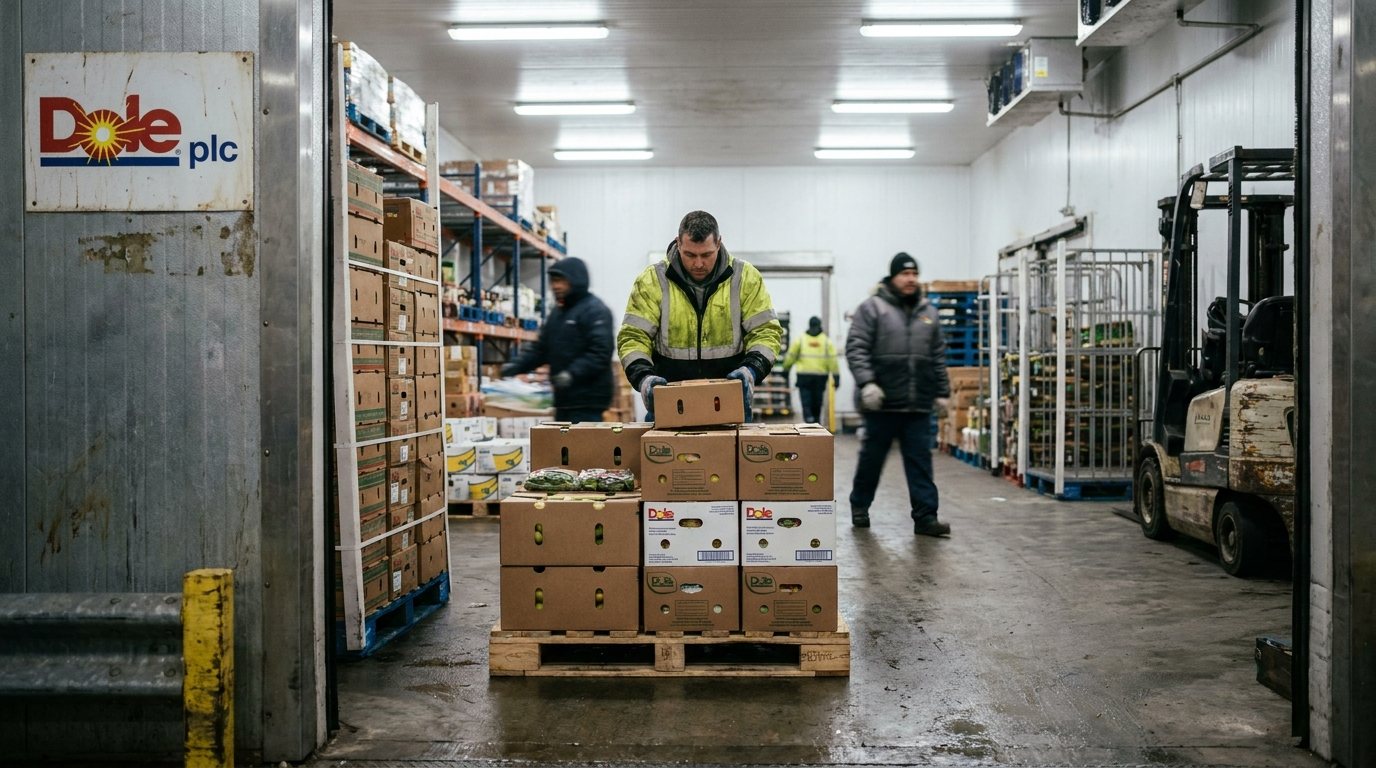
Dole plc shows up on Modern Distribution Management's 2026 Top Distributors list in the Food & Beverage category, the annual ranking of North America's largest distributors across 20 verticals. That placement undersells what Dole actually is. Most companies on that list buy from manufacturers and sell to customers. Dole grows the product, ships it on its own vessels, ripens it in its own rooms, and only then hands it to a buyer. The distribution is the last step of a chain the company owns end to end.
Two family businesses, a century apart
Dole's American half starts with James Dole, a Harvard-trained horticulturist who founded the Hawaiian Pineapple Company on Oahu in 1901 and shipped his first canned pineapple two years later. Castle & Cooke, a Hawaiian trading firm dating to 1851, took control of the struggling pineapple grower during the Depression and folded it in fully by 1961. In 1968 Castle & Cooke bought Standard Fruit and Steamship Company, adding bananas and Central American plantations and giving the combined company the vertically integrated shape it still has today, according to Wikipedia's account of the company's history.
The other half starts in Ireland. Charles McCann built an apple-exporting business in 1890 that eventually merged into Fyffes, the banana importer Edward Fyffe had founded in London two years earlier. By 1986 an Irish holding group controlled by the McCann family owned Fyffes outright. In 2006 Fyffes spun off its broader produce trading arm as Total Produce plc, a separate public company that kept growing through European acquisitions, per Wikipedia's entry on Fyffes.
Those two lines converged in 2018, when Total Produce bought a 45 percent stake in Dole Food Company from David Murdock, the billionaire who had taken Dole private and public twice since acquiring Castle & Cooke in 1985. Three years later the two companies fully merged into Dole plc, listing on the NYSE in 2021.
The insight: the American brand, the Irish chair
Here is the part that does not show up on the About page. Dole is the more famous name and the larger operating business, but the merger left a McCann in charge. Carl McCann, whose family's 1890s apple-trading company is the root of the whole structure, chairs Dole plc's board today, while Rory Byrne runs it as CEO. A 130-year-old Irish produce trading house ended up governing the company built on the Hawaiian Pineapple Company and the Dole brand. In a sector where consolidation usually means the biggest balance sheet wins the boardroom, this merger ran the other way: the smaller, older family concern kept the gavel.
A brief timeline
| Year | Event |
|---|---|
| 1890 | Charles McCann founds an apple-export business in Ireland |
| 1901 | James Dole founds Hawaiian Pineapple Company |
| 1968 | Castle & Cooke acquires Standard Fruit, forming Dole's banana business |
| 1986 | McCann-controlled FII plc acquires Fyffes |
| 2006 | Fyffes demerges Total Produce |
| 2018 | Total Produce buys 45% of Dole Food Company |
| 2021 | Total Produce and Dole merge into Dole plc, list on NYSE |
Retreating to the core, then expanding it again
The years since the merger have been about deciding what Dole plc actually wants to own. In 2025 the company sold its Fresh Vegetables division, the bagged-salad and packaged-greens business that carries the heaviest food-safety exposure in the produce aisle, to private equity firm Arable Capital Partners, which folded it into its organicgirl subsidiary. That came after an earlier attempt to sell the same unit to Fresh Express collapsed when the Department of Justice objected on antitrust grounds, according to Wikipedia's summary of the transaction. Losing that deal and then finding another buyer within roughly two years suggests a company that had already decided packaged greens sat outside its core, and was simply waiting for the right exit.
What it kept doing instead was buying more of the whole-fruit business it actually wants. In mid-2026 Dole closed the acquisition of Greenfood AB's fresh produce division, adding a distribution facility in Helsingborg and expanding its footprint across Sweden and Finland, and separately sold its Ecuador port operations to TIL Switzerland for roughly $75 million in net proceeds, trimming a capital-heavy asset while keeping the sourcing relationship, per Dole plc's recent news coverage on StockTitan. First-quarter 2026 revenue came in at $2.34 billion, up 11.6 percent year over year, with $100.3 million in adjusted EBITDA.
Run those two threads together and a pattern appears: Dole is shedding processing-heavy, recall-prone categories (packaged salads) while adding distribution capacity in categories it already dominates (fresh fruit in new geographies), and unloading fixed port infrastructure where a partner can operate it just as well. That is a company narrowing its definition of what a fresh-produce distributor should own, not one growing for its own sake.
Scale, briefly
Per Dole plc's own investor materials, the company operates from roughly 30 countries with about 32,000 employees, 110,000 acres of owned farmland, and more than 250 facilities spanning farms, packhouses, vessels, and distribution hubs, moving over 300 product lines. That is the infrastructure an MDM list entry compresses into a single line item: ships, ripening rooms, packhouses, and the branches that finally hand a pineapple or a banana to a grocery buyer.
Every company in this series earns its place on MDM's list through some version of the same unglamorous work: a catalog kept current, a branch network that shows up on time, data that does not lie about what is actually on the truck. Dole's version of that discipline starts in a field, not a warehouse, and that is worth remembering the next time a banana shows up priced the same as it was last month.