
Interstate Plastics: A Family Distributor Picks Its Buyer
Interstate Plastics grew from a 1980 Sacramento startup into a plastics distributor, then chose a family-owned peer as its buyer instead of private equity.
Part of Distributor Playbooks — strategy teardowns of every company on the MDM Top Distributors lists.
Interstate Plastics shows up in the unranked Plastics category of the 2026 MDM Top Distributors list, the annual accounting from Modern Distribution Management of North America's largest wholesale distributors. It sits there alongside Curbell Plastics, Piedmont Plastics, Polymershapes and a handful of other full-line plastics houses, none of which disclose sector revenue. Within months of that list going to print, one of those neighbors bought Interstate outright. The story of how a 46-year-old Sacramento company ended up there is a better lesson in specialty distribution than most acquisitions get credit for.
Two Cadillac Plastics alumni start over
Interstate Plastics was founded in 1980 by Galen Klokkevold and Don Salvatore, both of whom had cut their teeth at divisions of Cadillac Plastics, then the dominant name in plastic sheet, rod and tube distribution. That lineage matters. Plastics distribution has always been a business people learn at someone else's counter before they go build their own, and Interstate belongs to a long tradition of Cadillac-trained operators who left to start regional players. Klokkevold and Salvatore picked Sacramento, a market with less competition than the coasts, and built a full-line distributor around the same core catalog every plastics house sells: sheet, rod, tube, bar, film, plus the fabrication accessories and care products that turn a materials sale into a relationship.
Building depth instead of just breadth
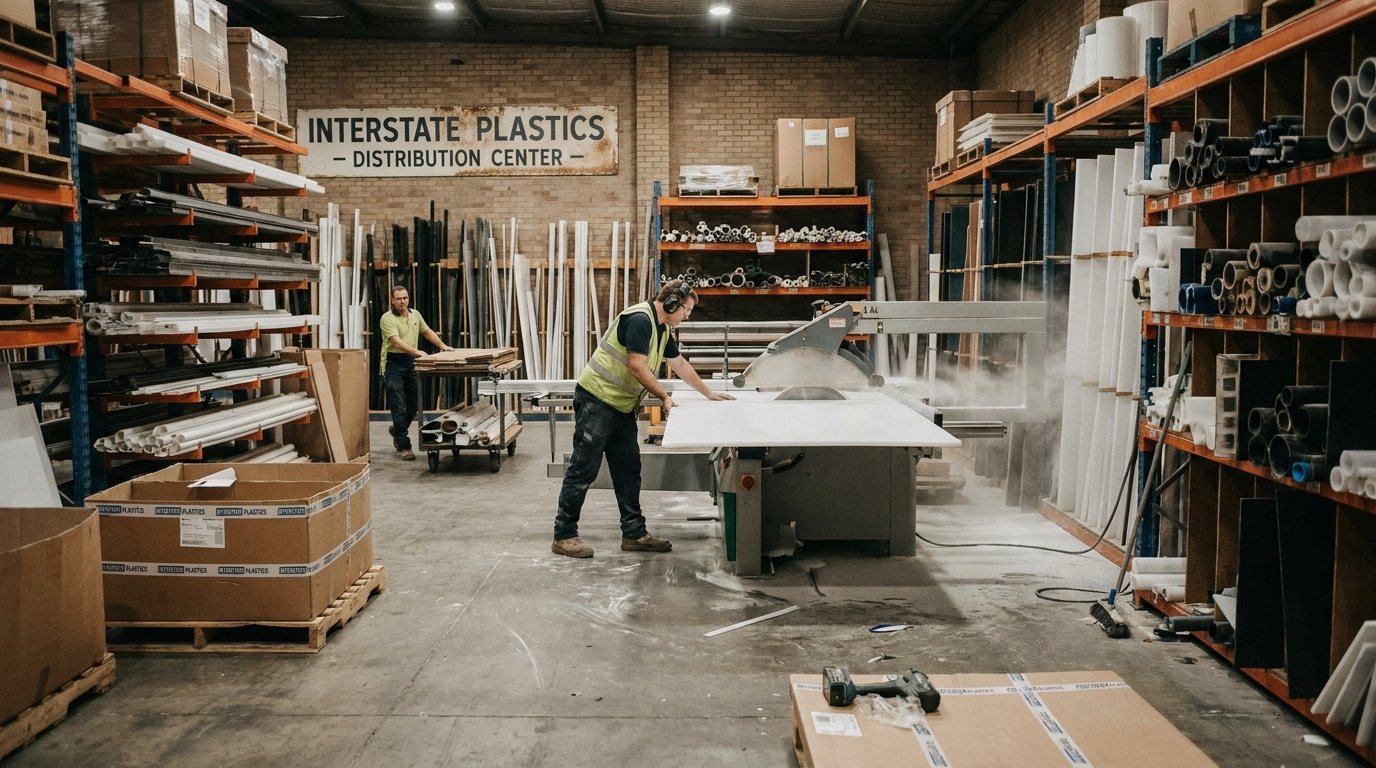
What kept Interstate relevant for four decades wasn't a novel model. It was steady addition of the capabilities that separate a plastics stockist from a plastics fabricator: cut-to-size service, CNC machining, and specialization in materials for semiconductor, medical, aerospace and food-grade applications. Those are demanding end markets. A distributor selling into semiconductor cleanrooms or orthotics and prosthetics manufacturing has to carry certifications, documentation and material traceability that a generalist branch doesn't need. Interstate grew to roughly nine locations concentrated in the western U.S., small by the standards of a $17 billion industrial distributor but exactly the footprint a technical plastics specialist needs: dense enough to serve regional fabricators quickly, not so large that inventory turns suffer.
Somewhere along the way the company rebranded to Interstate Advanced Materials, a name change meant to signal a broader materials mix that included reprocessed industrial and post-consumer closed-loop plastics. It was a bet that sustainability-minded sourcing would matter more to its aerospace and medical customers going forward, and it repositioned the company as a materials specialist rather than a straight stock-and-cut shop.
The insight: two family businesses chose each other over private equity
Here's the part that doesn't show up on Interstate's about page. In April 2026, Curbell Plastics acquired Interstate Advanced Materials, adding nine locations and more than 150 employees and pushing Curbell's network to 31 sites nationwide, with the new territory concentrated on the West Coast where Curbell had been thin. Plastics News covered the deal as a straightforward geographic fill-in. The more interesting fact is who was buying.
Curbell isn't a private-equity platform. It was founded in 1942 by brothers Edmond and Leonard Leone, who started as a macaroni maker with an attached machine shop and pivoted into plastics distribution after the war when chemical manufacturers came looking for someone to sell their new polymer materials. Curbell has stayed in the Leone family ever since, through its 75th anniversary in 2017 and past. That means a plastics distribution deal in 2026, in a sector where private equity has been an active and well-documented buyer of fragmented specialty distributors, was actually a merger of two multigenerational family businesses. Cole Klokkevold, who had taken over as Interstate's CEO, said in the announcement that "Curbell is the right long-term owner for Interstate." Curbell president Gerry Helbig called it "a strong strategic fit." Neither statement reads like spin once you know what Curbell actually is.
Why family sold to family
That choice is worth naming plainly because it cuts against the direction the plastics distribution vertical has been moving. Roll-ups and platform consolidators have been active buyers of independent plastics stockists for years, and the entire manufacturing distribution landscape has drawn heightened antitrust attention over exactly that pattern. A founder-led company with technical depth in medical and semiconductor materials, sitting on the MDM list next to bigger consolidated players, is a natural acquisition target for a financial sponsor looking to build scale. Interstate went the other direction. It sold to a company with the same origin story as its own: two guys who started something in an unrelated business, pivoted into plastics, and kept it in the family for decades.
A quick timeline
| Year | Event |
|---|---|
| 1942 | Curbell founded by the Leone brothers as a macaroni maker with a machine shop |
| 1980 | Interstate Plastics founded in Sacramento by Galen Klokkevold and Don Salvatore |
| 2017 | Curbell marks its 75th anniversary, still family-owned |
| 2026 | Both companies appear independently on the MDM Top Plastics Distributors list |
| April 2026 | Curbell acquires Interstate Advanced Materials, reaching 31 locations |
For a reader trying to understand how specialty distribution actually consolidates, the lesson isn't that scale wins. It's that in a fragmented, technical vertical like plastics, cultural fit between family owners can beat a bigger check from a financial buyer, and the MDM list is where you can watch that play out one acquisition at a time.
This series exists because distribution's real advantage rarely shows up in a press release. It lives in the branch network, the catalog depth and the decades of relationships that decide who a founder trusts enough to sell to.