
Liquid Tech Solutions: A Fueling Roll-Up With No Branches
Liquid Tech Solutions made MDM's 2026 Lubricants & Fuels list by skipping branches entirely, building a mobile fueling network through a five-year acquisition run.
Part of Distributor Playbooks — strategy teardowns of every company on the MDM Top Distributors lists.
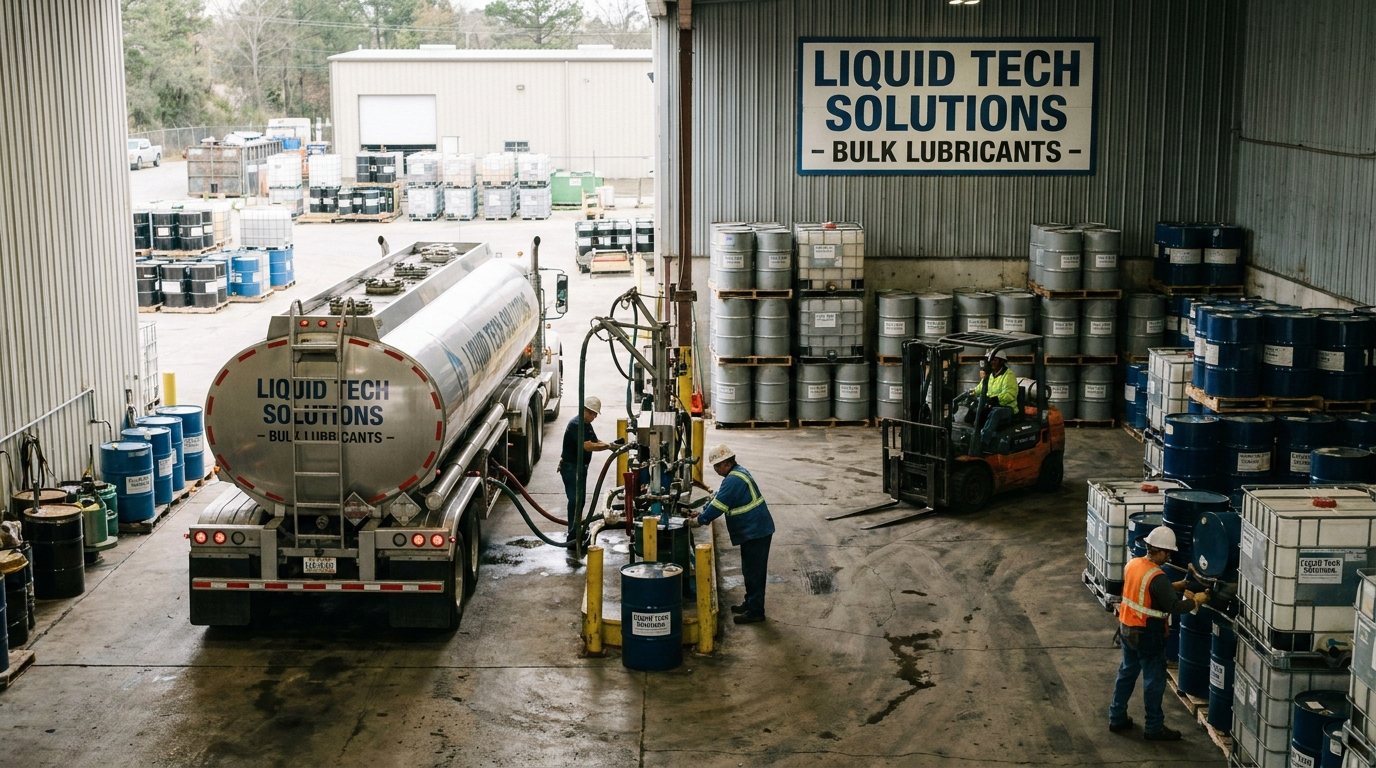
Liquid Tech Solutions lands on Modern Distribution Management's 2026 Top Distributors list in the Lubricants & Fuels category, a vertical usually defined by tank farms, bulk plants, and delivery routes radiating out from fixed terminals. LTS has none of that. It sells diesel and diesel exhaust fluid the way a courier sells parcels: the truck comes to you, refuels your equipment where it sits, and leaves. That single design choice, made by a Massachusetts founder in 1998 and then supercharged by five years of private equity roll-up, is the reason a company most shippers have never heard of just became the largest mobile on-site refueling operator in North America.
A route business before it was a category
William McNamara started Liquid Tech Solutions in 1998 in Stoughton, Massachusetts, building what became, per Lindsay Goldberg's investment page, "the transportation industry's largest national mobile fueling company." The pitch to a trucking fleet or a construction site was simple: stop sending drivers off-route to a truck stop, stop paying a yard hand to run a fuel can, and let a specialized tanker come to the equipment instead. Add diesel exhaust fluid delivery, tank monitoring, generator refueling, business continuity fuel programs, and marine and gasoline delivery, and LTS built a services layer on top of a commodity that most distributors sell as a straight molecule.
That model matters because it inverts the standard distributor playbook. Most companies on MDM's lists win through branch density: more locations closer to the customer. LTS's answer to density was to delete the branch and put the inventory on wheels. According to Wind Point Partners' announcement of the company's 2025 combination with Velocity Rail Solutions, LTS runs roughly 1,200 specialized vehicles serving about 18,000 customers across nearly 30,000 sites nationally. That is a fleet playing the role a branch network plays everywhere else in distribution.
The Lindsay Goldberg years: buy, add on, repeat
Lindsay Goldberg bought LTS in 2020 and, according to PE Professional's account of the eventual exit, executed roughly 15 add-on acquisitions over the following five years, expanding LTS from a regional operator into a business serving all 50 states. Lindsay Goldberg's own site describes the same period more conservatively, citing "more than 10 follow-on investments," but both accounts describe the same shape: a founder-built niche business turned into a buy-and-build platform, with revenue and EBITDA growing more than 150 percent along the way per PE Professional's reporting.
That is the pivotal bet in this company's history. McNamara did not sell the company outright and step away in 2020. He stayed on as CEO and kept building through the PE ownership period, adding rail and power-related fueling capabilities to the original truck-to-truck core. Krishna Agrawal of Lindsay Goldberg framed the exit as reflecting the firm's "commitment to partnering with high quality, founder-led businesses," which is standard deal-announcement language but also an accurate description of what actually happened here: five years of acquisitions bolted onto an operating company whose founder never left.
Timeline
| Year | Milestone |
|---|---|
| 1998 | William McNamara founds Liquid Tech Solutions in Stoughton, Massachusetts |
| 2020 | Lindsay Goldberg acquires LTS and begins a five-year buy-and-build program |
| 2020-2025 | Roughly 15 add-on acquisitions; expansion from select markets to all 50 states |
| July 2025 | Wind Point Partners combines LTS with Velocity Rail Solutions, forming North America's largest mobile on-site refueling platform |
Why the Velocity Rail combination is the interesting part
In July 2025, Wind Point Partners bought LTS from Lindsay Goldberg and immediately merged it with an existing portfolio company, Velocity Rail Solutions, which provides locomotive refueling and rail services. The rationale, per Wind Point's release, is straightforward adjacency: LTS knows truck-to-truck refueling and route logistics technology, Velocity Rail knows how to keep freight and passenger locomotives fueled under mission-critical conditions, and neither business overlapped much with the other's customer base before the deal. The combined entity gets a broader end-market footprint across trucking, rail, marine, and emergency power without having to build any of those adjacent capabilities from scratch.
The board advisors brought in for the new platform tell you where Wind Point thinks the growth is: Tracy Leinbach, former CFO and EVP of fleet management at Ryder System, and Farrukh Bezar, former chief strategy officer at CSX Transportation. That is a rail-and-fleet pairing, not a fuels-distribution pairing, which suggests the next chapter for LTS looks less like "bigger diesel distributor" and more like "infrastructure services company that happens to sell fuel as one line of its business."
The tension worth naming
A mobile, branchless fueling model scales fast because the unit of expansion is a truck route, not a piece of real estate. That is also its constraint. LTS's edge depends entirely on routing density and utilization; a truck sent to service a thin territory is a much worse asset than an idle branch, because it is depreciating and burning its own fuel while it drives to find work. The 15-acquisition run under Lindsay Goldberg reads as an attempt to solve exactly that problem by buying density in adjacent geographies rather than growing it organically, route by route. Whether Wind Point can keep converting rail, marine, and power adjacencies into the same route-density economics, rather than just adding logos to a portfolio, is the open question for LTS's next five years.
Distribution keeps proving that the physical layer, whoever owns the truck, the tank, or the terminal, is where the real advantage sits. Liquid Tech Solutions just built an entire category by putting that layer on wheels.