
Motion & Control Enterprises: The Repair-Shop Roll-Up
How Motion & Control Enterprises turned a 1951 lubrication franchise into a 62-location fluid power distributor by acquiring repair shops, not just warehouses.
Part of Distributor Playbooks — strategy teardowns of every company on the MDM Top Distributors lists.
Motion & Control Enterprises lands at #15 in Fluid Power, #41 in Industrial Supplies and, newly, #25 in MRO Industrial on Modern Distribution Management's 2026 Top Distributors lists, with 2024 revenue of $488 million. That placement undersells the more interesting story: a Pittsburgh lubrication franchise that spent seven years compounding into one of the more aggressive roll-ups in fluid power, and did it by buying repair shops as deliberately as it bought distributorships.
A franchise, not a founding vision
MCE's roots go back to 1951, when Wayne G. Ritter set up Ritter Engineering Company in Pittsburgh as a franchised distributor of Trabon centralized lubrication systems, according to MCE's own company history. It was a regional bet, not a grand strategy: branches followed in Chicago in 1957, Milwaukee in 1958, and Detroit in 1963, and the company relocated its headquarters to Zelienople, Pennsylvania in 1990. For most of its life it was a single-region industrial distributor renamed Ritter Technology in 2000, unremarkable next to the national names in fluid power.
The pivot came in 2018, when Chicago private equity firm Frontenac acquired the business, folded Ritter Technology in as the "RitterTech" division, and formed Motion & Control Enterprises as the platform company around it, per Frontenac's MCE portfolio page. That is the moment a 67-year-old regional distributor became a chassis for consolidation.
The acquisition math
The pace since 2018 is the real story. By June 2023, CEO Charles Hale said MCE had completed 10 acquisitions since January 2021 alone, serving more than 23,000 MRO and OEM customers across 39 facilities in 13 states, per Frontenac's announcement of the Power & Pump and Industrial Control Services deals. Frontenac ran a secondary transaction in 2023 to bring in fresh capital and keep the roll-up funded, according to the same portfolio page. Three years later, MCE reported 33,000-plus customers across 62 facilities in 18 states in its announcement of the TLR Hydraulics and Tripp Electric Motors acquisitions in May 2026. That is roughly 60 percent facility growth in three years, an unusually fast clip for a distributor competing in mature, capital-intensive verticals like pumps and hydraulics.
The targets read like a category shopping list: Filter Resources, Nova Hydraulics and Ultimation Industries in 2023; North East Technical Sales, three ParkerStore locations, Air Automation Engineering and Romanoff Industries in 2024. Each deal adds either geography, a product category, or a brand relationship MCE didn't previously carry.
The insight: MCE is buying the repair cycle, not just the shelf
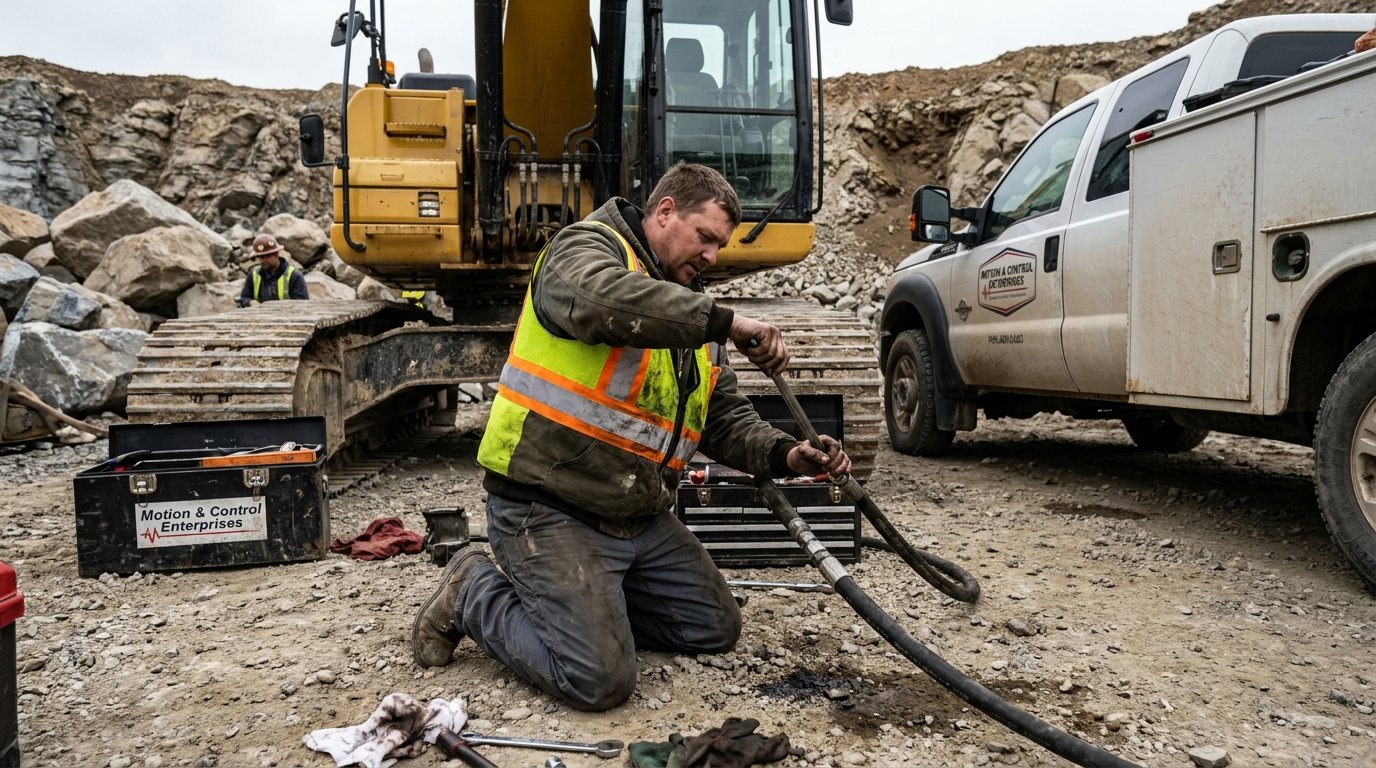
Here is the pattern that separates MCE from a garden-variety distribution roll-up. Its two most recent deals, TLR Hydraulics in Dallas and Tripp Electric Motors in Belle Glade, Florida, are not distributors at all. TLR does hydraulic cylinder and pump repair and high-pressure hydraulics machining; Tripp repairs electric motors, gearboxes, pumps and related process equipment. Hale framed the Tripp deal explicitly around "the growing Florida water and wastewater market" and the ability to serve customers across the full equipment lifecycle, sales, maintenance and emergency repair, per the same distributionstrategy.com report.
That framing matters. A distributor that only sells new pumps and valves competes on price and availability against every other catalog. A distributor that also owns the shop that rebuilds the impeller when the pump fails five years later owns a relationship that repeats on its own schedule, regardless of new capital spending cycles. Repair revenue is stickier than transactional resale because it is tied to an installed base MCE didn't have to win twice. The 2023 Power & Pump acquisition made the same move in miniature. Beyond its municipal pump distribution, Power & Pump brought repair services and status as U.S. master distributor for the All Prime Pumps self-priming line, giving MCE both a product line and a service tail in one purchase, per Frontenac's release.
Most fluid power roll-ups chase geographic density or manufacturer lines. MCE is chasing both, but it is also deliberately layering a repair-and-maintenance annuity underneath its distribution footprint, converting industrial customers into recurring service accounts rather than one-time equipment buyers. That is a different bet than most peers on the MDM list are making, and it shows up in acquisition targets that look nothing like a typical distributor.
What holds it together
MCE now operates through more than 20 acquired brands, including RitterTech, Diversified Air Systems, Swanson Flo Control, Nova Hydraulics and Piedmont Electric Motor Repair, spanning flow control, fluid power, rotating equipment, automation and hydraulic repair. Keeping that many brand names, catalogs and repair shops coherent under one back office is the unglamorous half of the strategy nobody profiles: pricing consistency across 62 facilities, shared vendor relationships, and inventory data that has to reconcile across companies that were, until recently, strangers to each other's systems. The M&A pace is the visible strategy. The integration discipline behind it is the part that determines whether $488 million in revenue becomes $700 million or a tangle of disconnected repair shops wearing one logo.
Distributors like MCE remind you that scale in this channel is rarely won on branding. It is won in the unglamorous mechanics of distribution: which catalogs stay accurate across dozens of acquired brands, which branch has the part in stock, and how cleanly the data behind it all holds together as the company keeps buying.