
North American Plastics: The Rollup That Kept 40 Names
North American Plastics made the 2026 MDM Top Distributors Plastics list by refusing the one thing every rollup usually does: erase the brands it buys.
Part of Distributor Playbooks — strategy teardowns of every company on the MDM Top Distributors lists.
North American Plastics holds a 2026 placement on Modern Distribution Management's Top Distributors list in the Plastics vertical, MDM's annual ranking of the largest distributors across 20 product categories in North America. True to its history of staying quiet about the numbers, MDM lists no disclosed revenue for the company. That reticence turns out to be the least unusual thing about it.
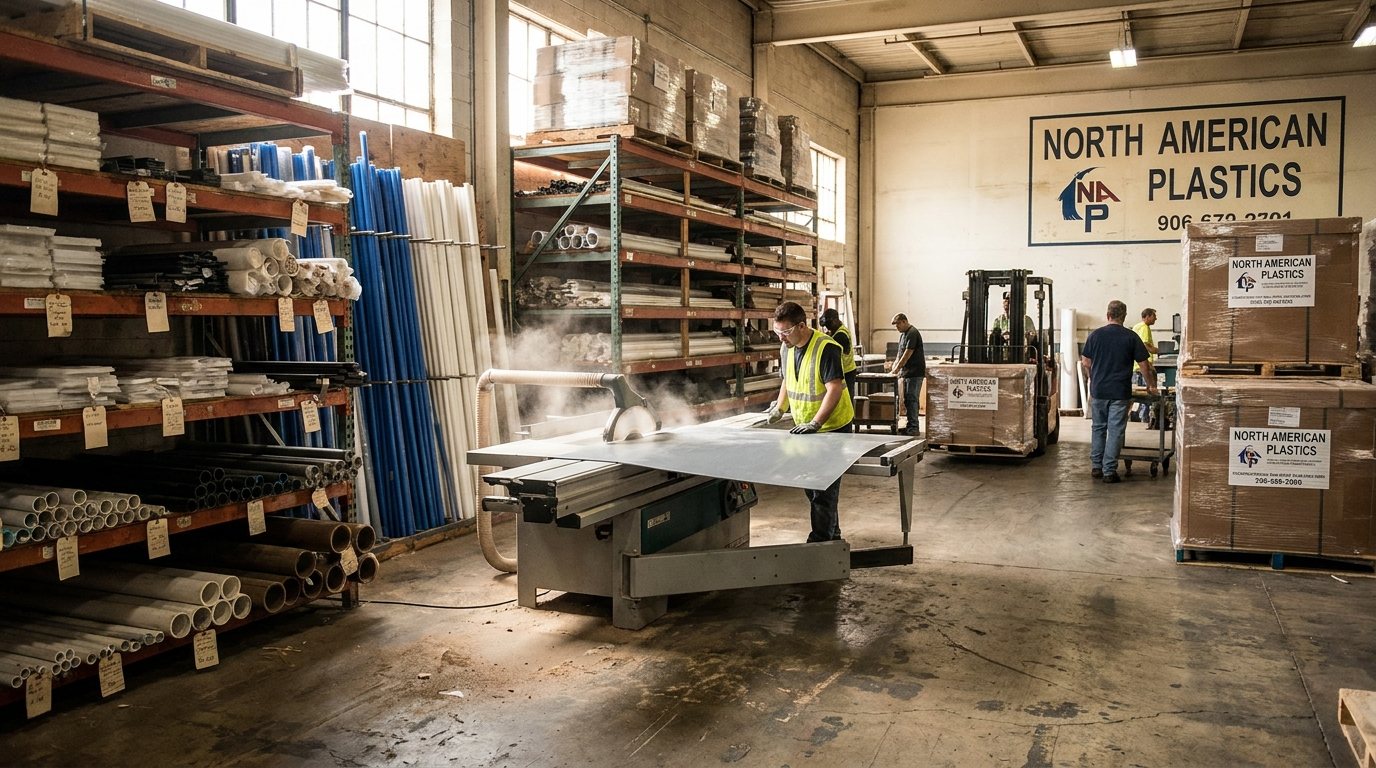
The company now does business publicly as Plastics Family Americas, and its own homepage still redirects straight from northamericanplastics.com. What it has built underneath that rebrand is a genuinely odd structure for a distributor its size: over 200 locations, more than 40 heritage brands, and a deliberate choice to leave almost all of those brand names standing rather than paint over them.
The rollup that didn't roll up the names
Look at the brand list on plasticsfamilyamericas.com and you find Polymershapes, Laird Plastics, Total Plastics, Port Plastics, Modern Plastics, ePlastics, Farco Plastics, JAG Fabrication, and dozens more, each still trading under its own name. Most consolidators in industrial distribution do the opposite. They buy a dozen regional players, fold them into one national identity within eighteen months, and book the synergy savings from a single ERP, a single logo, and a single sales script.
Plastics Family Americas has had years, in some cases decades, to do that math and has not done it. The company's own description of its model uses the word "decentralized" and "empowering" back to back, and each location is described as operating as its own business unit. In specialty plastics distribution, that restraint is the strategy, not a failure to execute one. Customers buying custom-cut acrylic sheet, engineered polymer stock, or fabricated components are usually buying from a technical rep who knows their spec history, not from a catalog price. The brand on the truck is the relationship. Erase forty of those and you erase the reason forty different sets of customers kept calling.
What the ownership churn upstream looked like
The clearest illustration of why that restraint matters sits inside Polymershapes itself, the largest name in the group and, per its own company history, a business assembled from Cadillac Plastics (Detroit) and Commercial Plastics (Philadelphia), both dating to 1949.
| Year | Event |
|---|---|
| 1949 | Cadillac Plastics and Commercial Plastics founded independently |
| 1999-2000 | GE acquires both, merges them into GE Polymershapes |
| 2008 | GE sells the plastics distribution business to SABIC |
| 2017 | Polymershapes separates from SABIC, returns to independent ownership |
Three corporate parents in under seventy years, each one presumably arriving with a plan to consolidate, rebrand, or centralize. The brand survived all three anyway, and the version of it now inside Plastics Family Americas is still called Polymershapes. That track record is a quiet argument for why a platform assembling dozens of similar businesses would bet on preserving identity over erasing it: the distributor names that outlast their parent companies tend to be the ones that never got renamed in the first place.
The profit-sharing spine underneath the brand map
The other piece of the model that does not fit the typical rollup playbook is compensation. Plastics Family Americas describes an uncapped profit-sharing program it says has run for more than 75 years, open to employees across the network with no ceiling on payout. Combined with a stated preference for promoting from within over hiring externally, this reads less like a financial-engineering rollup and more like a federation that happens to share a back office.
That distinction matters for a simple reason: branch-level technical sales in plastics distribution is retention-driven work. The rep who has spent a decade learning a customer's tolerances and lead times is the asset. A compensation model that predates most of the acquisitions by decades, and that survives them intact, is a structural reason those reps stay through an ownership change instead of walking with the account.
A global family that still doesn't advertise itself
The Americas operation sits inside a larger, quieter international network. Plastics Family Americas' own site places it alongside Amari Plastics in the UK and Vink in continental Europe, and MM Plastics in Australia, operating as sibling brands under a shared "Plastics Family" umbrella rather than one global marque. Amari Plastics, per its own site, trades under 17 brands inside just its UK parent structure. The pattern repeats at every scale: buy distribution capability, keep the name, keep the local relationship, and let the group behind it stay largely invisible to anyone outside the trade.
That invisibility is the honest tension in the whole model. A network with 200-plus locations, 2,000-plus employees, and sibling operations on three continents is, by any normal measure, one of the largest players in its category. It also shows up in public rankings with no disclosed revenue and no single recognizable brand a customer outside the industry would name. The upside is real: forty trusted local identities are harder for a competitor to dislodge than one national account team. The cost is real too: a decentralized structure of that size almost certainly means duplicated systems, uneven digital execution, and a harder job cross-selling a customer who buys from Laird Plastics in one region and Total Plastics in another without realizing they are the same company.
The insight worth naming
The plain version of the pattern is this: North American Plastics won its category by acting like a holding company for reputations rather than a rollup building one brand. Everywhere else in industrial distribution, scale usually arrives by consolidation. Here it arrived by resisting it, on the theory that the forty names on the doors were worth more intact than merged.
Distribution rarely gets the credit it deserves for the unglamorous machinery that makes it work: the branch that stayed open under a name nobody outside the trade recognizes, the catalog that never got simplified into one SKU list, the rep who outlasted three parent companies. This series exists to look at that machinery directly.