
OTC Industrial Technologies: One Name, Forty Brands
OTC Industrial Technologies ranks on three 2026 MDM Top Distributors lists. Its real story is a 1963 family firm that became a 40-brand roll-up.
Part of Distributor Playbooks — strategy teardowns of every company on the MDM Top Distributors lists.
In 1963, David Derrow and L. Philip Carstens started a Columbus, Ohio company selling motion-control equipment out of a single location with six employees. Six decades and roughly three dozen acquisitions later, that company shows up on the 2026 MDM Top Distributors lists as OTC Industrial Technologies: No. 23 in Industrial Supplies, No. 5 in Power Transmission/Bearings, and No. 11 in Fluid Power. The name on the door has changed twice. The strategy underneath it has stayed remarkably consistent, and the way OTC handles its own brand tells you more about how it competes than any tagline does.
A family business, then two private equity owners
Phil Derrow, David's son, took over as CEO in 1998 and ran the company for 22 years, a tenure in which revenue grew more than tenfold and headcount grew fivefold, according to Industrial Distribution's account of his transition to chairman. That is the kind of long, patient compounding you see in family-run distributors: no dramatic pivots, just steady branch-by-branch and product-line-by-product-line expansion across the industrial Midwest.
The ownership structure changed twice in the 2010s. Irving Place Capital, a middle-market private equity firm, took a stake and by its own account backed ten add-on acquisitions before selling the company to Genstar Capital in April 2019. At the time of that sale, Ohio Transmission Corporation had 38 branches in 17 states and had already completed 16 acquisitions since 2010. Genstar's stated thesis, per its own announcement and coverage from Pumps & Systems, was simple: keep buying.
That is exactly what happened. By 2025, OTC had closed roughly 23 acquisitions under its current ownership era, including the February 2025 purchase of Premier Equipment Corporation and Premier Control Systems in Baton Rouge and the August 2025 addition of Fleetwood Industrial Products and P-M Industrial in the Northeast, per MDM's coverage and reporting on the Louisiana deals. The footprint now runs to roughly 60 branches across more than 40 states and about 2,000 employees, per the company's own about-us page. Three ownership eras, one acquisition machine that never really stopped running.
The insight: one company name, forty brand names
Here is the part that is easy to miss if you only skim the press releases. In January 2022, after that first wave of PE-driven acquisitions, the company renamed itself from Ohio Transmission Corporation to OTC Industrial Technologies, unveiling a new logo and consolidating its business into four segments, as covered by Industrial Distribution and Industrial Supply Magazine. That was a real consolidation move: one parent identity to sit above everything it had bought.
But look at what OTC did underneath that new umbrella name, and the strategy reverses. The company's own our-companies page lists close to 40 operating brands still trading under their acquired names: Buckeye Pumps, Furey Filter & Pump, JCI Industries, Keller Electrical, P-M Industrial, PumpTek, Premier Equipment Corp, and dozens more, organized loosely into four groups (rotating equipment, air supply, automation, and finishing/dispensing/filtration). This is not an oversight or a slow rebrand-in-progress. It is a deliberate house-of-brands structure, and it cuts against how a lot of industrial roll-ups behave once they hit scale. Competitors like Applied Industrial Technologies or Motion Industries sell under one national name because a unified brand simplifies marketing, catalogs, and cross-selling. OTC has bet the opposite way at the operating level: a pump distributor's fifty-year-old name in its home market is worth more to the customer relationship than the parent's national scale is, so keep it.
The trade-off is real. A federated brand structure means more separate go-to-market motions, more legacy systems and catalogs to eventually reconcile, and a harder job unifying data and customer records across companies that never had to talk to each other before they were acquired. It is a bet that local trust outlasts back-office tidiness, at least until the parent decides the integration math has changed.
What the model is actually built on
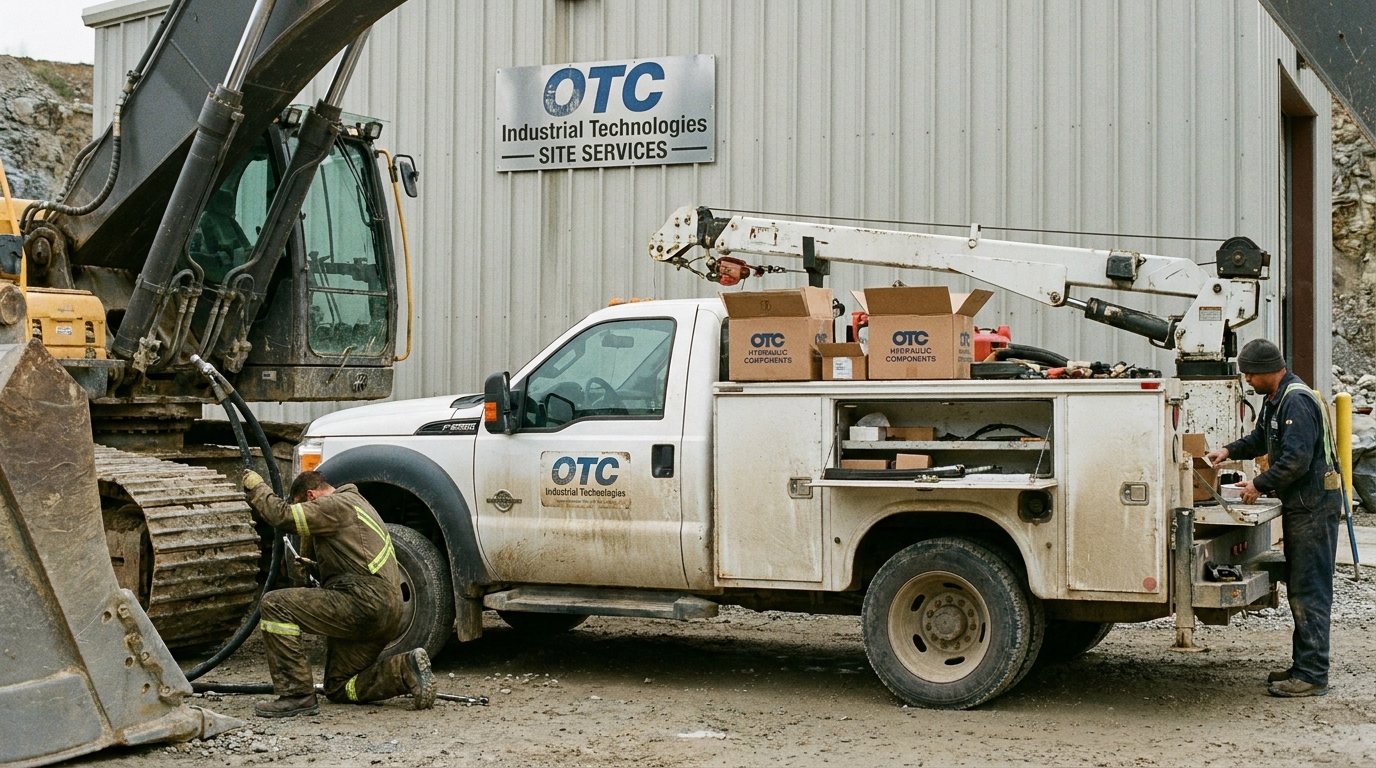
Underneath the brand question, OTC's playbook is standard for a successful engineered-distribution roll-up, executed with unusual discipline. It buys businesses with technical depth, not just catalog breadth: mechanical seals and packing (P-M Industrial), rotating equipment and control panel fabrication (Premier Equipment, Premier Control Systems), compressed air systems, pump repair. It layers field service, custom engineering, and repair-center capability on top of distribution, which is what lets it compete on uptime rather than price alone. And it keeps buying in adjacent geographies rather than leaping into new categories, which is why its three 2026 MDM placements cluster so tightly around rotating equipment, power transmission, and fluid power rather than sprawling into unrelated verticals.
| Era | Ownership | Approx. footprint |
|---|---|---|
| 1963-2015 | Founder-led / family (Derrow, Carstens) | Single Columbus location growing to dozens of branches |
| 2015-2019 | Irving Place Capital | 38 branches, 17 states; 10+ add-ons |
| 2019-present | Genstar Capital | ~60 branches, 40+ states; ~23 add-ons; renamed 2022 |
The distributors that make these MDM lists year after year are rarely the ones with the flashiest story. They are the ones that figured out, decades before it was fashionable to call it a "platform strategy," which parts of the business to standardize and which parts to leave alone.
This series exists because the companies that move steel, seals, and bearings across a continent are also, quietly, some of the best-run data operations in American business, whether or not their catalogs have caught up yet.