
How Pilot Thomas Logistics Built an Oilfield Fuel Giant
Pilot Thomas Logistics didn't grow from one shop. It was merged from a Permian Basin fuel jobber and a truck-stop giant's logistics arm in 2014.
Part of Distributor Playbooks — strategy teardowns of every company on the MDM Top Distributors lists.
Pilot Thomas Logistics shows up in the Lubricants & Fuels category of Modern Distribution Management's 2026 Top Distributors list, the annual accounting of North America's largest wholesale distributors across 20 verticals. MDM doesn't publish a revenue figure for the Fort Worth company, which tracks with how it operates: privately held, PE-backed, and content to let drilling rigs, barges, and mine sites talk instead of a marketing department. The more interesting fact isn't the ranking. It's that the company doing the ranking is barely a decade old, built by merging two businesses that had nothing to do with each other until a deal closed in December 2014.
A Merger, Not a Founding
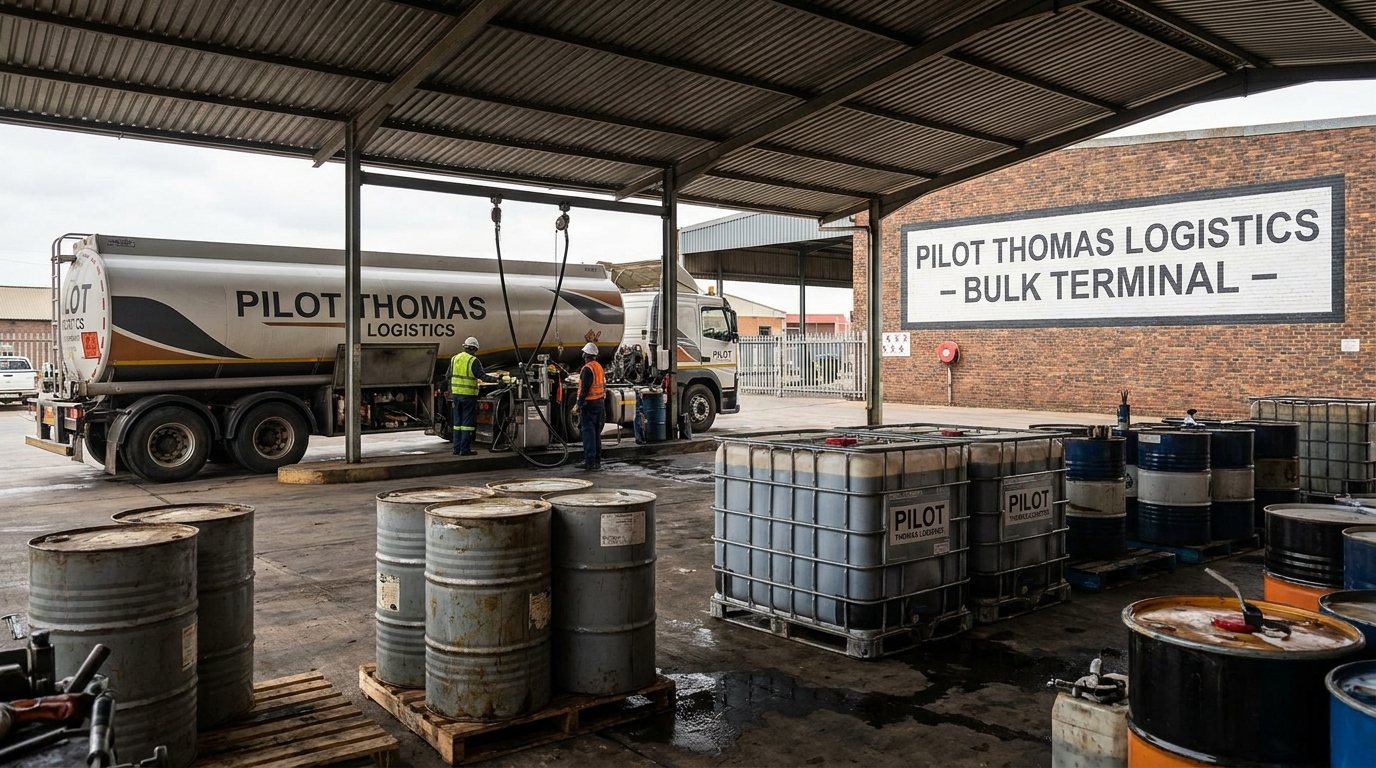
Pilot Thomas Logistics exists because Pilot Logistics Services and Thomas Petroleum announced the completion of their merger on December 4, 2014. At close, the combined company reported more than 4,500 employees, operations across 25 U.S. states and Canada, over 1,500 specialized trucks, and 40,000-plus mobile tanks in the field. Scott Prince became CEO and president of the new entity; Cliff Thomas, who had built one half of the business, stayed on as chairman.
That structure matters. Most oilfield fuel and lubricant distributors trace to one person who started buying and selling out of a single yard. Pilot Thomas Logistics traces to a deal memo.
Two Very Different Halves
Thomas Petroleum was the more conventional half: Cliff Thomas started it in 1980 and grew it into a South Central U.S. fuel and lubricants distributor with more than 35 warehouses and 700-plus trucks, earning recognition as one of the nation's top five Chevron lubricants marketers and top five Exxon gasoline distributors along the way. It was a classic energy-belt jobber, built for drilling rigs and frac crews in Texas and the Permian Basin.
Pilot Logistics Services came from somewhere else entirely. It was the wholesale fuel and logistics arm of Pilot Company, the travel-center operator that traces to Pilot Oil Corporation's founding as a single gas station in 1958 and grew into the country's largest network of truck stops under the Pilot Flying J brand. Pilot Logistics Services handled the unglamorous plumbing behind that empire: bulk fuel movement, cardlock infrastructure, distribution logistics at highway scale.
Neither company needed the other to survive. What the merger produced was something odd in the sector: an oilfield-fuel specialist with the operational bones of a national fuel-logistics network bolted on, instead of a jobber that scaled itself organically or a supermajor's captive distribution unit.
Growing by Acquisition, Not Just by Drilling Activity
The company kept the M&A habit going after 2014. In 2015, Pilot Thomas Logistics acquired controlling interests in Economy Boat Stores and Radcliff/Economy Marine Services, pushing the company into marine bunkering along the Mississippi River and Gulf Coast. Economy Boat Stores had been serving that market since 1936. True to form for the company, CEO Scott Prince kept the acquired firms' existing ownership and management in place as operating partners rather than folding them into a single brand, preserving the customer relationships that made the acquisitions worth making in the first place.
That's the pattern worth naming: Pilot Thomas Logistics doesn't grow the way most energy-sector jobbers grow, by riding drilling activity up and down. It grows by buying adjacent, cyclically-different businesses, marine fuel supply, lubricant blending, cardlock networks, and running them with local management intact. A rig count downturn in the Permian doesn't hit a Mississippi River bunkering operation the same way. The oilfield roots are real, per the company's own account of its history and services, which still lists drilling rigs and frac services alongside marine, mining, construction, agriculture, and propane. But the business model looks less like a fuel jobber's and more like a holding company's, assembled with a financial sponsor's logic about diversification against a single commodity cycle.
The Tension in the Model
The trade-off is straightforward and hasn't gone away. A company built by combining two operating cultures under private-equity ownership has to keep integration working across units that came in through acquisition rather than growing up together, all while its core Permian Basin customer base still lives and dies by oil and gas capital spending. Pilot Thomas Logistics has continued layering on new product lines, including a 2022 partnership to carry Petro-Canada Lubricants products across Arizona and Nevada, evidence that the diversification instinct from the marine deal never stopped. Whether that breadth outruns the concentration in oilfield energy is the open question for any distributor built this way.
Where That Leaves It
Pilot Thomas Logistics' MDM placement recognizes a company operating a national fuel, lubricant, and chemical supply network without ever having had a single founding story to tell. It has two: a Texas fuel jobber and a Tennessee truck-stop logistics arm, stitched together by a 2014 merger and kept growing since through the same instinct that produced it in the first place. In a sector full of family names on the door, that's the distinctive bet.
Every company in this series made a deliberate choice about how to win in distribution, and for most of them the unglamorous infrastructure, catalogs, branches, fleets, and the data behind all three, turned out to be the real product.