
Port Consolidated: The Distributor Anchored to Actual Ports
Port Consolidated made MDM's 2026 Top Distributors list in Lubricants & Fuels by staying in Florida and building depth at its ports instead of chasing states.
Part of Distributor Playbooks — strategy teardowns of every company on the MDM Top Distributors lists.
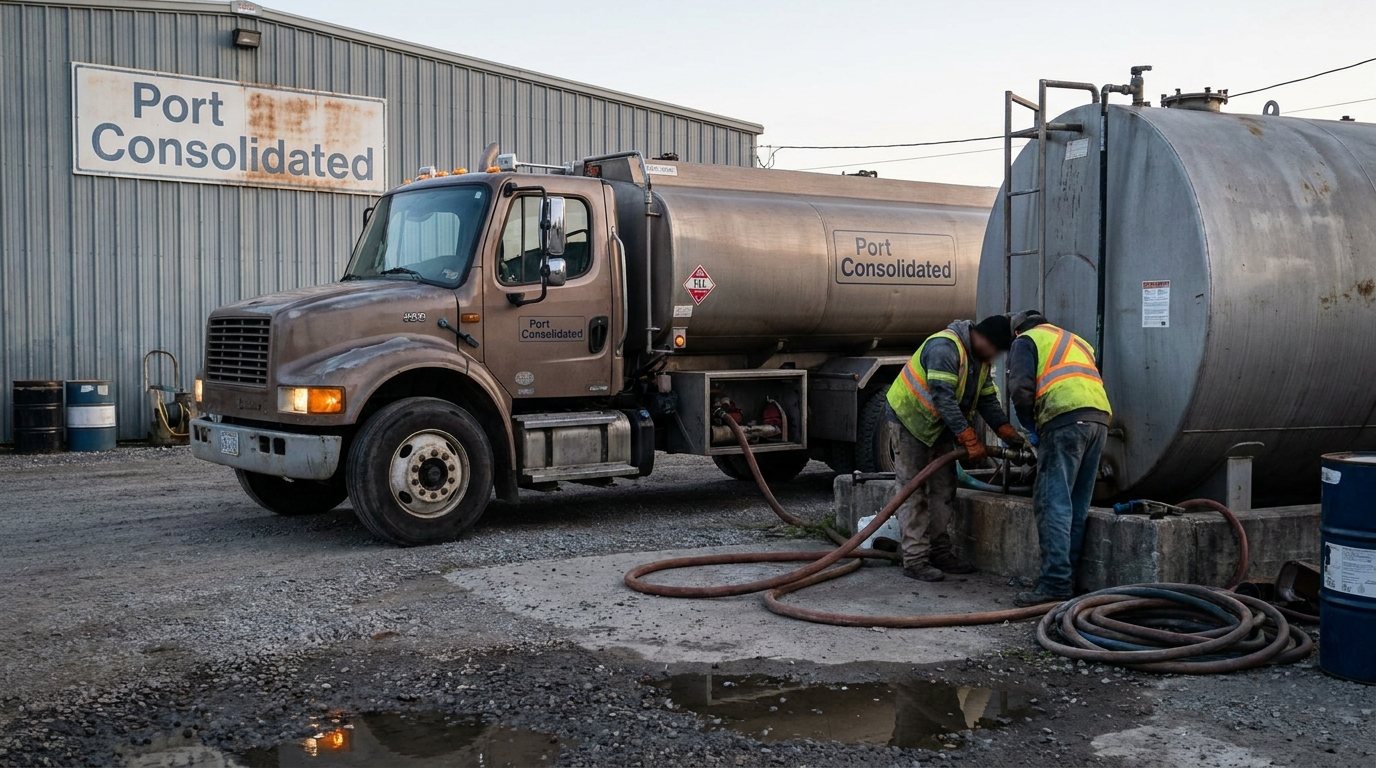
Port Consolidated's name gives away its origin: two Florida petroleum haulers, one called Port Petroleum and the other Consolidated Oil, decided that a fragmented South Florida fuel market had room for one stronger company instead of two competing ones. That merger now shows up in Modern Distribution Management's 2026 Top Distributors report, MDM's annual ranking of North America's largest distributors, in the Lubricants & Fuels category. MDM lists no 2025 revenue figure for the company, and that gap in the data is itself a clue to how this operator runs.
Two family businesses, one name
According to Port Consolidated's own account of its history, both predecessor companies survived the volatile fuel economies of the 1980s and 1990s before their owners chose consolidation over continued rivalry. Since 2000, the combined company has pursued what it describes as "tremendous internal growth" alongside "targeted strategic acquisitions" to build out infrastructure across Florida. The founders' names are not publicized and no specific merger date is posted, which fits a company that markets itself on service record rather than corporate biography: its homepage simply notes more than 50 years in business and a footprint that now reaches "Florida, the Caribbean, and Latin America."
The moat is the water
The strategic tell is in the addresses. Port Consolidated's headquarters distribution center sits inside Port Everglades, one of the busiest deepwater ports in the Southeast, and the company operates dedicated marine fuel docks in Fort Pierce and Fernandina Beach, according to its industries page. That is not incidental geography. Marine bunkering and export logistics to the Caribbean and Latin America require waterfront terminal access that a landlocked lubricants jobber simply cannot buy its way into overnight. Most of the national names on MDM's lubricants and fuels list built reach by adding states. Port Consolidated built reach by controlling the specific pieces of Florida's coastline that let fuel and lubricants move by both truck and ship.
Around those terminals sits a conventional distribution layer: 15 sites spanning Jacksonville, Tampa, Orlando, Miami, Fort Myers, West Palm Beach, and smaller markets like Fernandina Beach and Palatka, per the locations directory, plus dedicated cardlock fueling stations in Pompano Beach, Riviera Beach, and Tampa for fleet customers who want unattended, badge-swipe access rather than scheduled deliveries. That is a dense network for a single state, denser than most out-of-state competitors would bother building for one market, and it is the infrastructure that makes the marine and export business possible in the first place: fuel has to move from terminal to dock to hull without leaving the company's own trucks.
Nine industries, one map
Rather than chase geographic breadth outside Florida, Port Consolidated added vertical depth inside it. Its industries page lists distinct programs for automotive retail, trucking and fleets, heavy equipment, power generation, manufacturing, agriculture, marine, and aviation, each with its own product mix: turbine and hydraulic oils for power plants, AeroShell piston and turbine lubricants for aviation customers, ValvTect-branded marine products for boat operators. A single branch network is doing the work that, at most large distributors, would require separate regional business units. That concentration lets the company amortize one set of trucks, tanks, and technical reps across nine buyer categories instead of one, which is a meaningfully different growth lever than opening a sixteenth location in a new state.
Every major brand, no single bet
Port Consolidated also declines to marry one refiner. Its site lists active distribution agreements with Chevron, Shell (Pennzoil and Quaker State), Castrol, Valvoline, Phillips 66, and Kendall, alongside its own TekStar house brand. Many regional lubricants distributors build their identity around a single flagship supplier relationship. Carrying six competing major brands plus a private label means Port Consolidated is selling relationships and logistics, not a single manufacturer's price sheet, and it can route a customer to whichever brand fits their spec or budget without losing the account to a rival jobber. The company backs that catalog with services that make switching costly: oil analysis through a hosted portal and a wireless tank-monitoring product called Tank Tracker that automates reorder points so fleet customers stop calling in fuel orders manually.
The concentration bet
The honest trade-off is geographic. Every one of Port Consolidated's 15 sites sits in a state that takes direct hurricane hits most years, and its export business ties revenue to Caribbean and Latin American economies that carry their own volatility. A distributor with branches in a dozen states can absorb a bad storm season in one region; a distributor whose entire footprint is Florida cannot. The company's list of trade-association sponsorships tells the same concentration story from another angle: the Florida Petroleum Marketers Association, the Florida Trucking Association, and the Dade Diesel & Lubrication Association all point back to the same state rather than a national trade body. Port Consolidated has clearly decided that owning port access and nine-vertical depth in one state is worth more than diluting that focus by spreading thin across new ones, and MDM's national list recognizing a single-state player is the evidence that bet has paid off so far.
Distribution rarely gets written up for its ports and cardlocks, but that is where advantages like this one actually live.