Describely vs Hypotenuse AI: Which AI Product Content Tool Is Right for You?
Both Describely and Hypotenuse AI promise to solve the same core problem: your product catalog has empty fields, thin descriptions, and missing attributes, and you need AI to fix that at scale without hiring a content team. They compete in the same general category — AI-assisted product content for eCommerce — and at first glance their feature lists look nearly identical.
The difference shows up in the details. Describely is purpose-built for writing and publishing eCommerce copy, with a tight loop from SKU to published description and native connectors to Shopify, WooCommerce, and Wix. Hypotenuse AI is broader: it layers in attribute enrichment via web scraping, UPC lookups, and image analysis, and adds image editing and channel-ready copy for multi-channel teams. If you need descriptions fast and your attributes are already in reasonable shape, Describely is the sharper tool. If you are building enrichment infrastructure from scratch, Hypotenuse AI's broader surface area may be worth the enterprise pricing conversation.
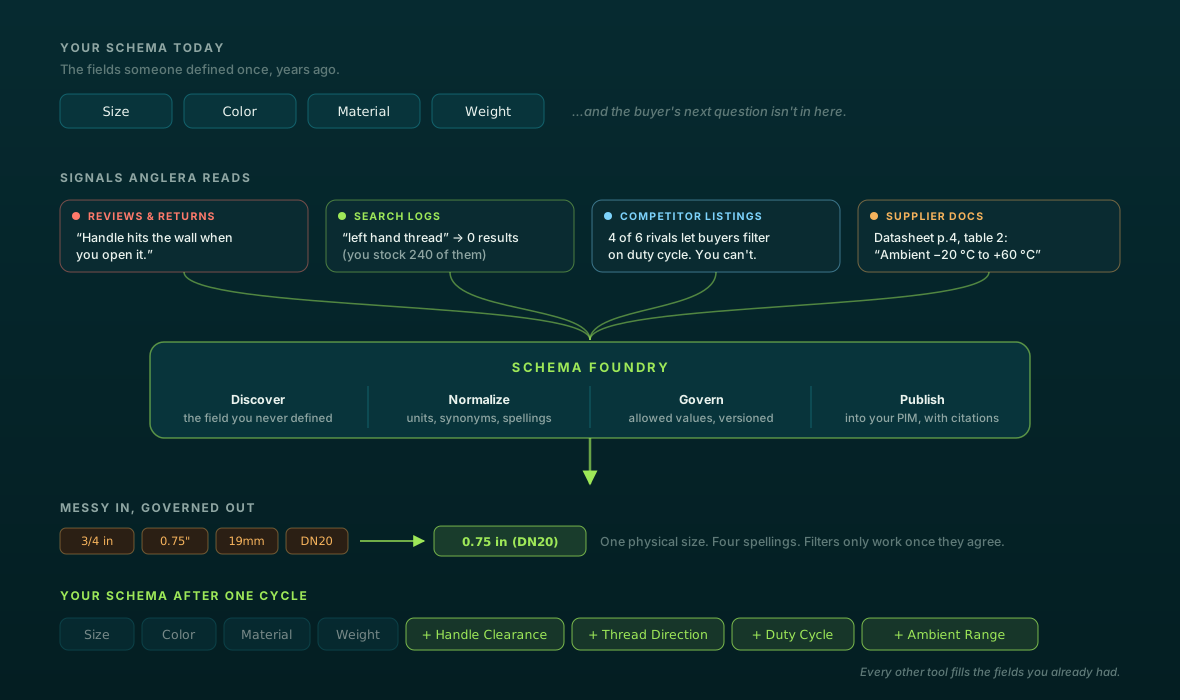
What neither tool does: write enriched data back to your PIM as the system of record, or score SKUs against live buyer signals to prioritize which products to enrich first. That is the gap Anglera fills — alongside whichever content platform you choose.
| Describely | Hypotenuse AI | Anglera | |
|---|---|---|---|
| Primary use case | AI writing and content generation for eCommerce — descriptions, titles, bullet points, meta tags — with attribute inference from sparse inputs like a SKU or product title. | All-in-one AI platform for eCommerce product content: attribute enrichment, description generation, image editing, taxonomy tagging, and channel-ready copy. | Enriches and scores every SKU against buyer signals, then writes the result back to your PIM. Works alongside either tool; does not replace either. |
| Attribute enrichment sources | Infers missing attributes from existing SKU data (title, partial specs). Does not appear to perform external web scraping or UPC lookups. | Enriches attributes via web scraping, UPC lookup, and image analysis — pulling structured data from external sources, not just inferring from existing fields. | Combines AI enrichment with buyer signal scoring to prioritize which attributes matter most for conversion, then syncs results to the PIM rather than a standalone content workspace. |
| Content and data output | Product descriptions, titles, bullet points, meta tags. Focused on SEO-ready storefront copy. | Product descriptions, SEO copy, taxonomy tags, enriched attribute fields, and image editing or generation. Broader content surface area. | Structured attribute data and enrichment fields — not marketing copy. Anglera handles data quality and write-back while Describely or Hypotenuse AI handles the copy layer. |
| Native platform integrations | Named native connectors to Shopify, WooCommerce, and Wix. Direct push to storefront CMS. | eCommerce workflow integrations at enterprise tier; connector specifics are not fully public. Confirm with the vendor for your stack. | Connects to your PIM as the source of truth. Writes enriched, scored data back to the PIM rather than directly to a storefront. |
| Pricing model | Pay-as-you-go from $28/month; data enrichment at $0.55 per product (10-product minimum). Transparent public pricing with enterprise custom plans available. | Marketing plans from roughly $29/month publicly. Attribute enrichment and taxonomy tagging are enterprise-only with a custom quote. Plan for a sales conversation if enrichment is the goal. | Custom pricing based on catalog size and enrichment scope. Approximately 30-day implementation. Contact for a quote. |
| Image capabilities | No image editing or generation noted. Text-content focused. | Includes AI image editing and generation as part of the platform — a meaningful differentiator for brands managing visual assets alongside copy. | Not applicable. Anglera enriches structured product data and attributes, not images or marketing creative. |
| PIM write-back and data layer | Generates and publishes content to connected storefronts. PIM sync is not a core feature; operates as a content tool, not a data layer. | Enriched data lives in the Hypotenuse workspace. PIM write-back depends on each customer's integration setup and is not a named core workflow. | Built specifically to enrich data and write it back to the PIM as the source of truth. This is the core workflow — continuous, scored, and tied to your master catalog. |
How to choose between Describely and Hypotenuse AI
Choose Describely if your primary job is writing and publishing storefront copy at volume and your catalog attributes are already in reasonable shape. The transparent pay-as-you-go pricing and native Shopify, WooCommerce, and Wix connectors make it a low-friction starting point for eCommerce teams that need descriptions, titles, and meta tags fast without a procurement cycle. If you want to test AI content at small scale before committing to a larger platform, the $0.55-per-product enrichment pricing lets you run a real pilot on a defined SKU set.
Choose Hypotenuse AI if you need to build attribute data from scratch — not just generate copy from fields you already have. Its ability to pull structured data via web scraping, UPC lookup, and image analysis makes it closer to a full enrichment platform than a writing tool. The image editing capability is a genuine differentiator for brands managing visual assets alongside product copy. Be prepared for an enterprise pricing conversation: attribute enrichment and taxonomy tagging sit behind a custom quote, so if that is the core feature you need, budget for a sales cycle.
If you manage a large catalog in a PIM and need enrichment that writes back to the system of record — not just a content workspace — neither tool covers that workflow on its own. That is where Anglera fits, alongside whichever content platform you choose.
Whichever you pick, the data still has to get done
Describely and Hypotenuse AI both operate in a content workspace. They generate and enrich product data within their own platforms and push results to connected storefronts. What they do not do is treat your PIM as the authoritative destination, score SKUs by buyer signals to surface what to enrich first, or maintain a continuous enrichment loop against your master catalog.
Anglera is the layer that does that work — regardless of which content platform you use. If you use Describely for copy generation, Anglera handles attribute enrichment and writes clean, scored data back to your PIM. If you use Hypotenuse AI for its broader enrichment and image workflows, Anglera ensures those results land in your source of truth and stay current against buyer signals. The two workflows do not overlap: Anglera handles the data infrastructure, the content platform handles the copy.
Your PIM stores the data. Anglera does the work. Implementation runs approximately 30 days, and Anglera connects to your existing PIM on day one — no migration required.
Frequently asked questions
Is Describely or Hypotenuse AI better for Shopify?
Describely has a named native connector to Shopify and is explicitly positioned for Shopify-based eCommerce teams. Hypotenuse AI supports eCommerce workflows but its Shopify integration details are less public — confirm with their sales team if you need direct Shopify push at catalog scale.
Can I use Anglera instead of Describely or Hypotenuse AI?
No. Anglera is not a content generation tool — it does not write product descriptions or marketing copy. Anglera enriches structured attribute data and writes it back to your PIM, scored against buyer signals. It is designed to work alongside a content platform like Describely or Hypotenuse AI, not replace one.
What does 'enterprise tier' mean for Hypotenuse AI's enrichment features?
Hypotenuse AI's attribute enrichment and taxonomy tagging features — the ones that go beyond description generation — are available on enterprise plans with custom pricing. If enrichment at catalog scale is the goal, plan for a sales conversation. Marketing-only plans start around $29/month and do not include those features.
Which tool is cheaper for enriching a large catalog?
Describely is the only tool with fully transparent per-product pricing: $0.55 per product for data enrichment. Hypotenuse AI's enrichment features are enterprise-priced with a custom quote. Anglera is also custom-priced based on catalog size and scope. For a small, defined SKU set where you want a fast and low-commitment test, Describely's pricing is the easiest to evaluate upfront.
Do Describely or Hypotenuse AI replace a PIM?
Neither tool is a PIM. Both operate as content workspaces that publish to storefronts. If you already have a PIM and need enriched data to live there as the source of truth, you will need a separate workflow to get data back into the PIM — which is exactly what Anglera is built to do.