
Your PIM added an AI button. It didn't add an enrichment team.
PIM AI assists a person filling one field at a time. That's genuinely useful — and it's not the same as owning the work across a hundred thousand SKUs. Knowing the difference is the difference between a tool and an outcome.
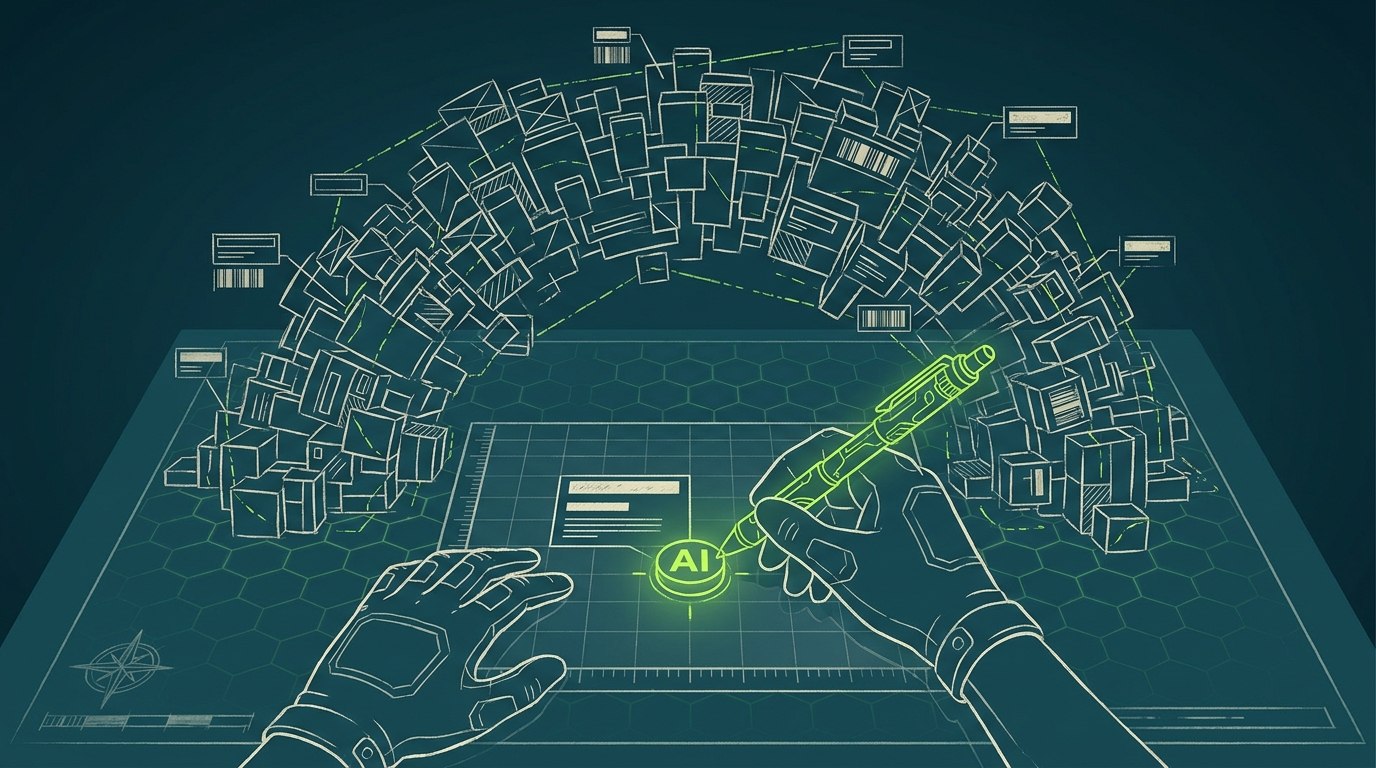
Every PIM has shipped AI features by now — generate a description, suggest an attribute, draft a title. They're good features. And they've created a reasonable question: if our PIM already has AI, what's left to add?
The answer is in the word "assist." PIM AI assists a person doing the work. It doesn't do the work. That gap is small on one SKU and enormous across a catalog.
Assistance scales with your headcount. The work doesn't.
A "generate" button helps whoever is already sitting in the record. It speeds up the field they're filling right now. But someone still has to open each product, gather the source spec, prompt the tool, check the output, and move on. The AI made each step faster; it didn't remove the step, and it didn't remove the person.
So the math barely changes. A category manager who owns 40,000 SKUs and touches 200 a quarter now touches maybe 260. The button is real. The bottleneck — human attention, one record at a time — is exactly where it was.
"Owning the work" is a different job
Doing the work, rather than assisting it, means starting from the catalog instead of from a single open record:
- Gathering the missing source data from suppliers and the open web, not waiting for someone to paste it in.
- Working the whole catalog, including the long tail nobody has time to open.
- Scoring every SKU against your quality standards and surfacing what's wrong before a channel rejects it.
- Keeping it current as products, suppliers, and channel requirements change — continuously, not in a one-time pass.
A PIM is built to store a clean record and syndicate it. It is not built to produce one across a catalog without a team driving it field by field. Both things can be true: your PIM is the right system of record, and it still assumes the work already happened.
Standards, set once, applied at scale
The objection usually hides a real fear: that automating enrichment means losing control of quality. It's the opposite when it's done right. Your experts define what "good" looks like once — the attributes that matter, the tone, the compliance rules — and that standard gets applied to every SKU, with nothing publishing below the bar. Review becomes a guardrail you set, not a queue you babysit, and it tapers as the system earns trust.
Keep the PIM. Add the work.
This isn't an argument against your PIM. Keep it — it's doing its job. The question is who fills it, completely and continuously, without an army.
That's the line Anglera draws: your PIM stores the data; Anglera does the work. Not a faster button inside the record — the enrichment itself, run across the whole catalog and written back to the system you already own. An AI button makes your team a little quicker. The goal was never a quicker team. It was a finished catalog.