Measurement & ROI
PIM total cost of ownership: the line every evaluation leaves out
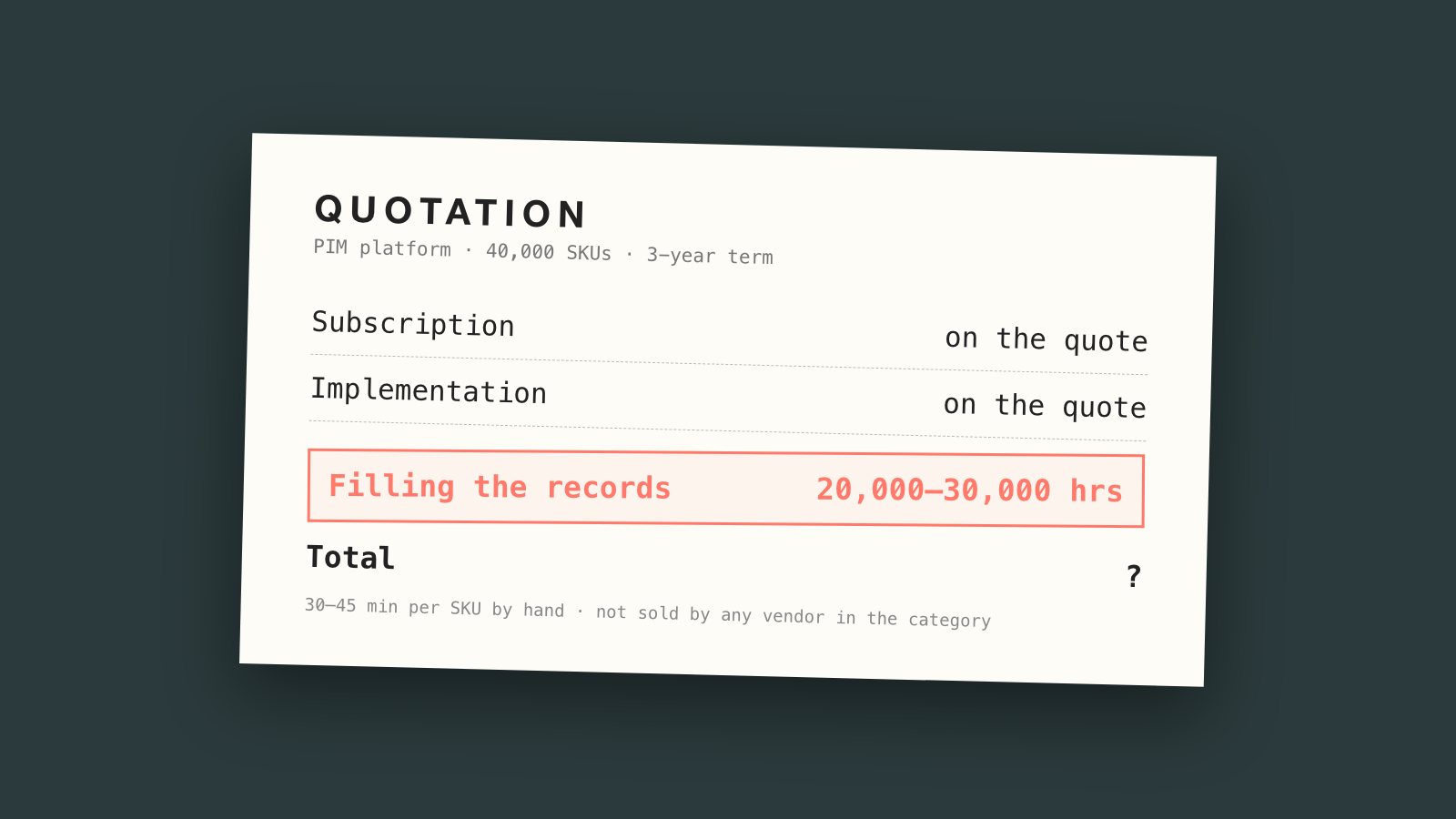
PIM TCO is licence, implementation and the team that fills the records. A worked 40,000-SKU example shows why the work is usually the biggest line.
Topic
Running catalog and PIM operations — onboarding, taxonomy, and governance — that scale.
PIM TCO is licence, implementation and the team that fills the records. A worked 40,000-SKU example shows why the work is usually the biggest line.
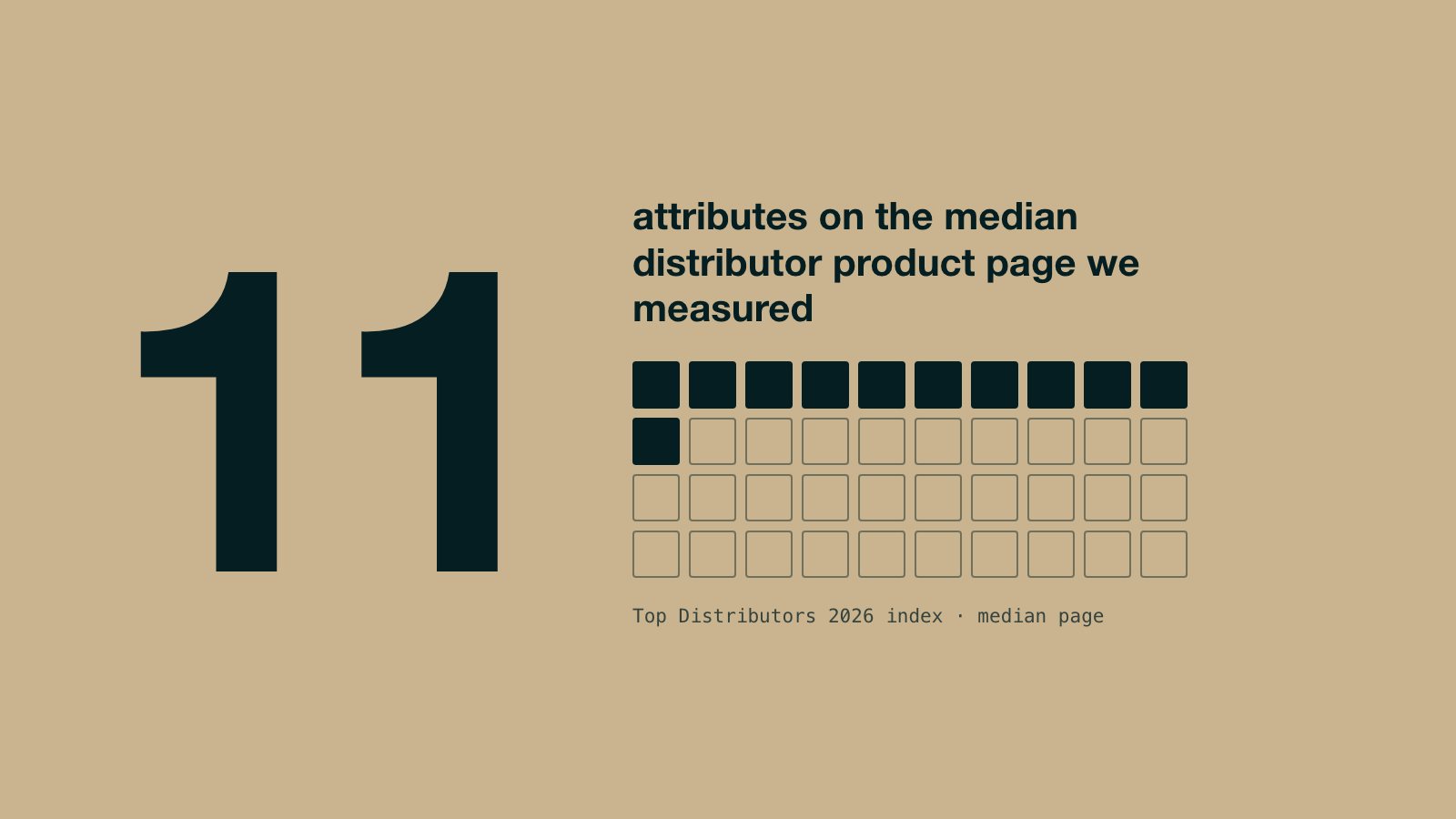
Gartner’s 2026 PIM Magic Quadrant read by a B2B distributor: the signals that matter at 50,000 SKUs and 400 suppliers, and the work left after you buy.
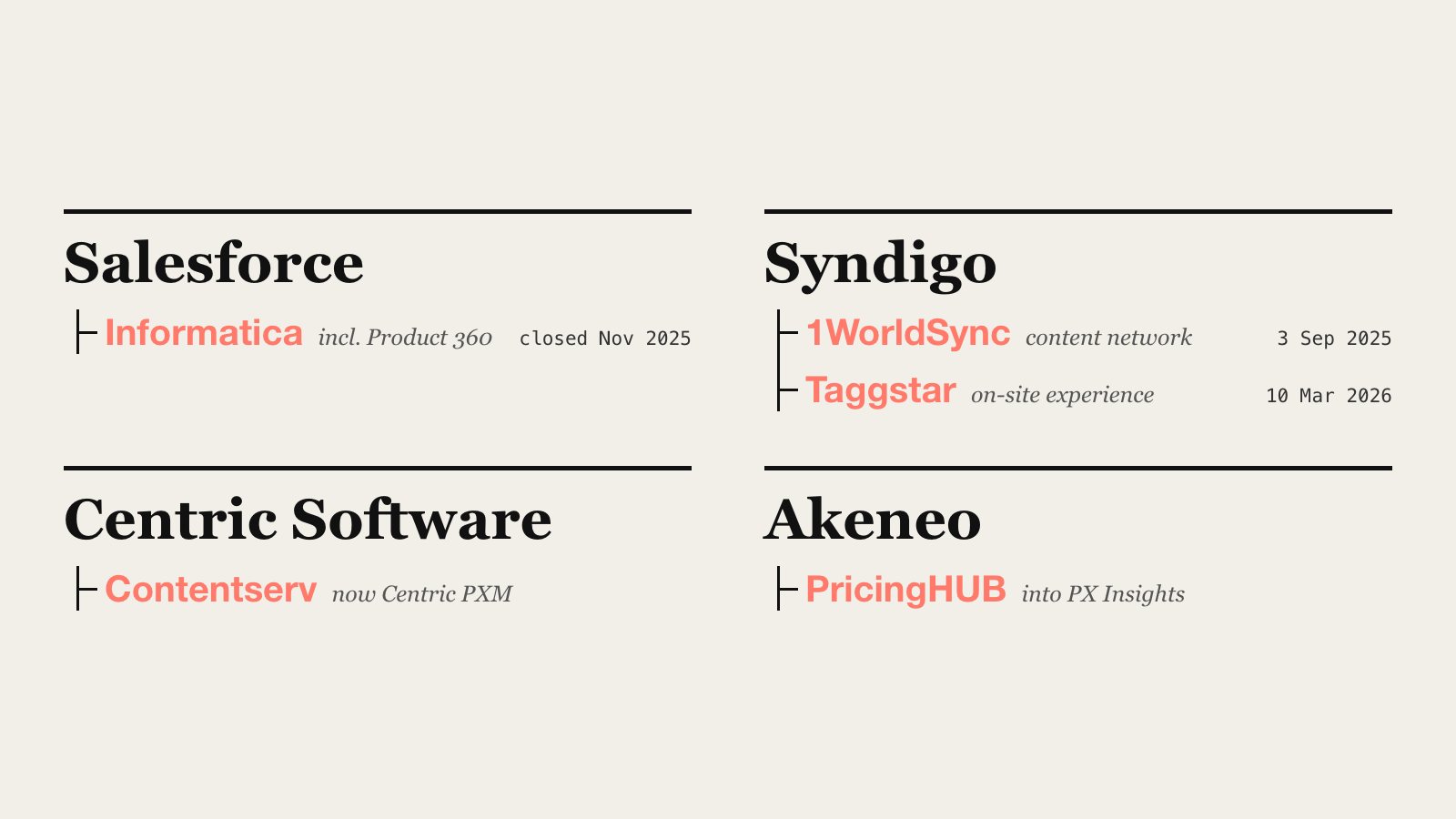
Salesforce owns Informatica, Syndigo owns 1WorldSync, Centric owns Contentserv. What PIM consolidation means for your roadmap, migrations and renewal.
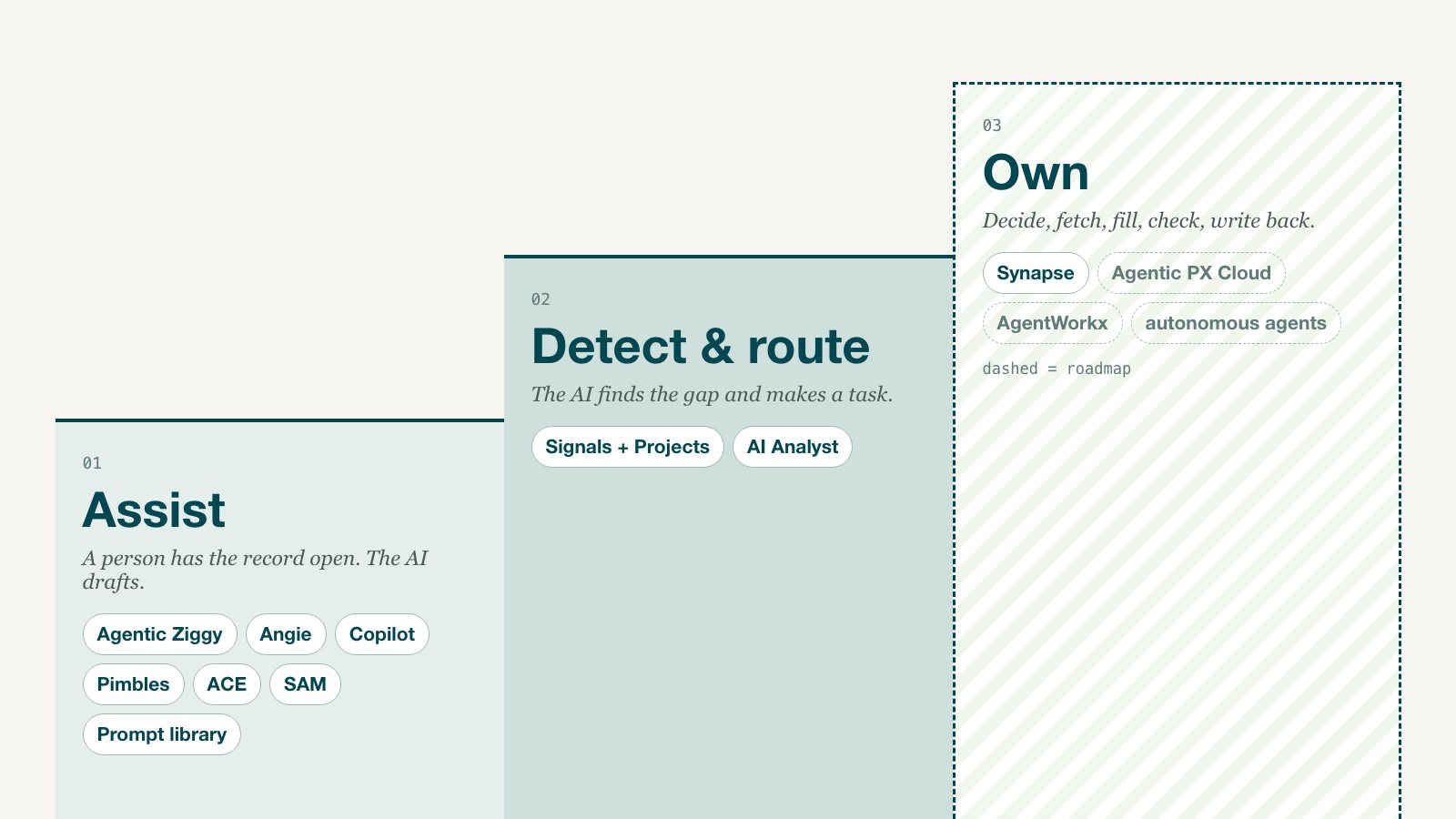
Ziggy, CLAIRE, Angie, Synapse, AgentWorkx: we sorted the AI in Gartner’s 2026 PIM Magic Quadrant into assist, detect-and-route, and agents. Then we tested it.

What Gartner’s 2026 PIM Magic Quadrant weights, what each quadrant means for your catalog, and a 6-step process to turn the report into a shortlist.
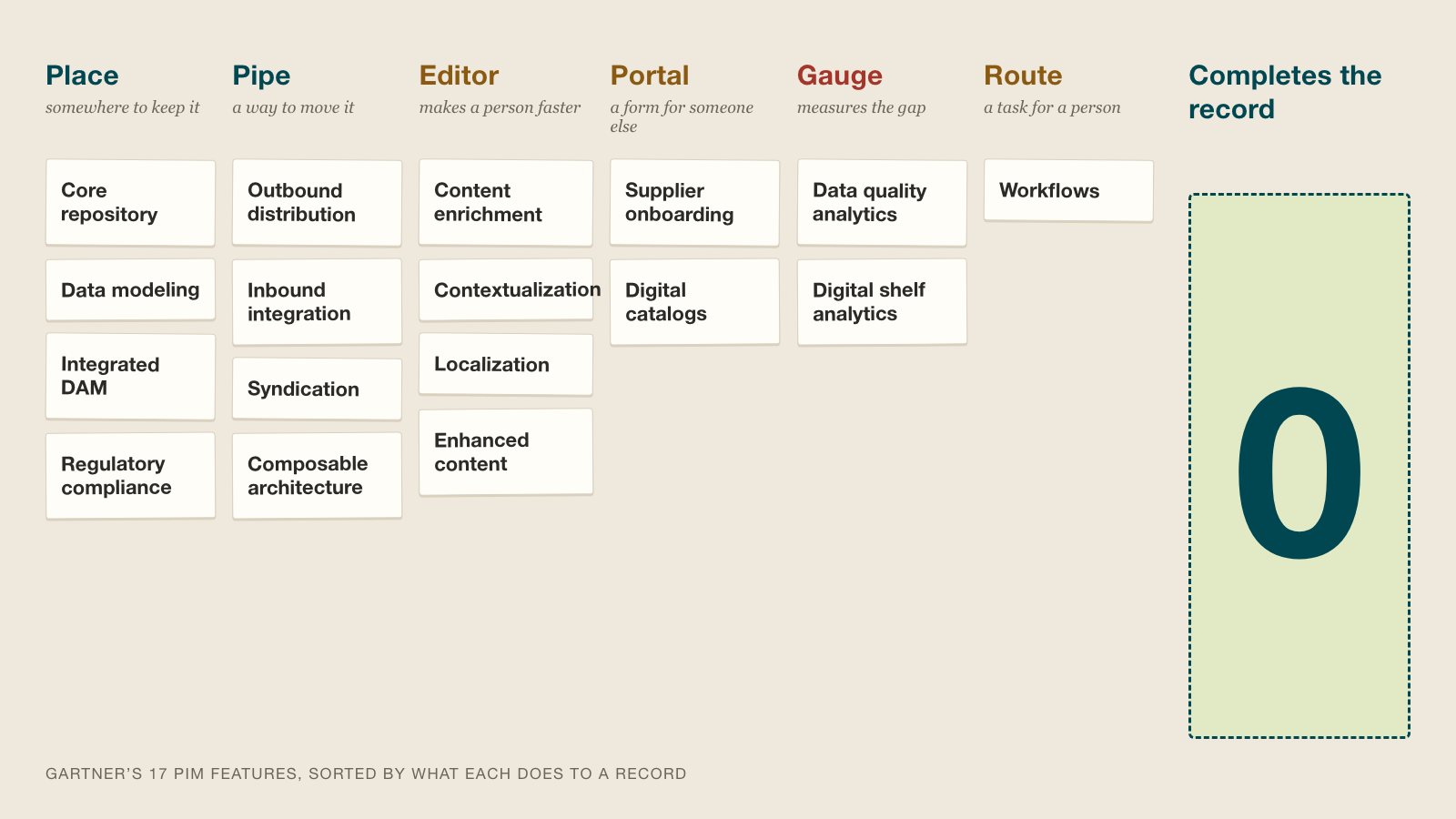
We sorted all 17 features in Gartner’s 2026 PIM definition into six buckets by what each does to a record. The count that completes one is zero.

PIM implementations fail from scope creep, no data owner, over-customised models, underestimated integrations and weak adoption, and most of all from bad data.

Prioritize SKUs to enrich by value times gap: score revenue, search demand, margin, returns and channel blockers, then multiply by how much data is missing.

Distributors sync ERP item data to their site via a native connector, middleware, a PIM in the middle, or scheduled file exports. The ERP owns price and stock.

Stop editing supplier titles. Parse them into attributes, normalize units and abbreviations, then generate every title from one formula per category.

A PIM stores, governs and publishes product data. Enrichment is the work of finding, extracting and validating the attribute values that fill it.

Running a PIM takes five roles: a product data owner, data stewards, catalog specialists, a PIM admin and an integration owner. Headcount hinges on enrichment.

Usually yes, if catalog size and channels justify one. But a PIM stores data and will not fill gaps: define the model, enrich in parallel, load clean.

Most PIM implementations take 2 to 6 months for a first release; enterprise multi-channel programs run 6 to 12 months. Data readiness sets the date.

PIM implementation runs about $30,000-$150,000 mid-market, often 50-200% of first-year licence, on top of licences from free to $300,000+ a year.

Offshore product data entry runs about $0.20 to $2.00 per SKU on published rate cards, at $4 to $8 an hour. QA, rework and spec changes decide the real cost.

MRO distributors run millions of SKUs by classifying each item, applying a per-class attribute template, automating supplier intake and enriching continuously.

MRO data cleansing turns free-text spare parts records into one structured record per part: classified, noun-modifier described, deduplicated, enriched.

LBM dealers need nominal and actual sizes, species, grade, treatment, selling units, code documents, account pricing and live inventory on each SKU online.

Lighting distributors store manufacturer IES files as SKU assets, then extract lumens, CCT, CRI, efficacy and DLC status into filterable fields per variant.

Jan/san distributors keep product data in an ERP item master, a PIM or ecommerce layer, and supplier feeds, then normalize case pack, SDS, and specs.

Manual enrichment of 50,000 SKUs takes roughly 3,300 to 25,000 hours, 4 to 30 minutes per SKU by depth. Here is the per-SKU math, FTE count and timeline.

Run OCR and table extraction on the spec sheet PDF, then map cells to your attribute schema, normalize units, split model rows into SKUs, and validate.

Yes. Enrichment is work done to product data and a PIM is where it is stored, so you can enrich an ERP export or CSV and load it into ERP, store, or feed.
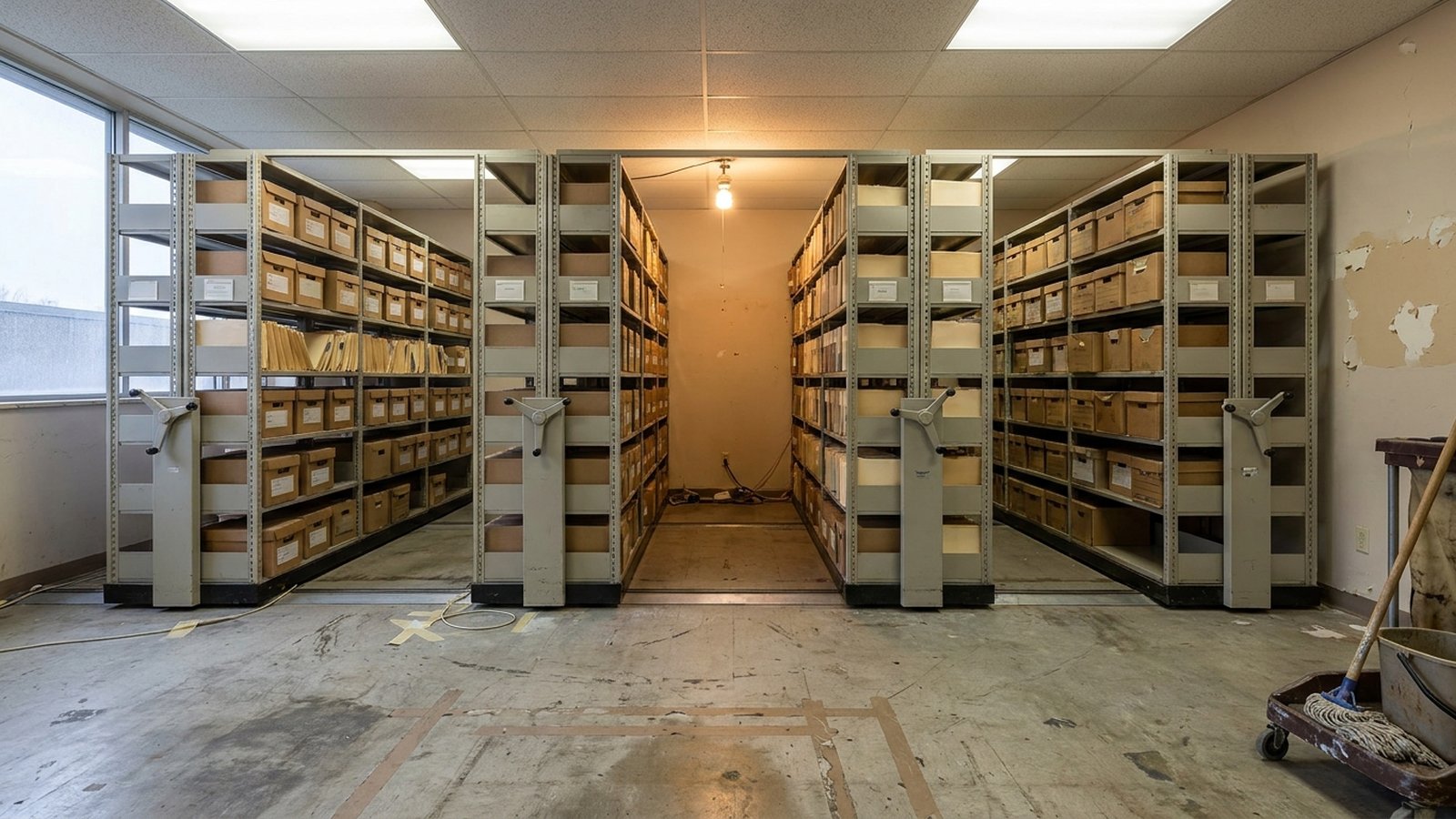
Before a PIM migration: inventory sources, dedupe SKUs, normalize units and values, map to the target model, fill required fields, test-import, then load.

Launch, list, or stay out — the marketplace choice actually turns on whether your catalog can produce a syndication-grade product record at all.
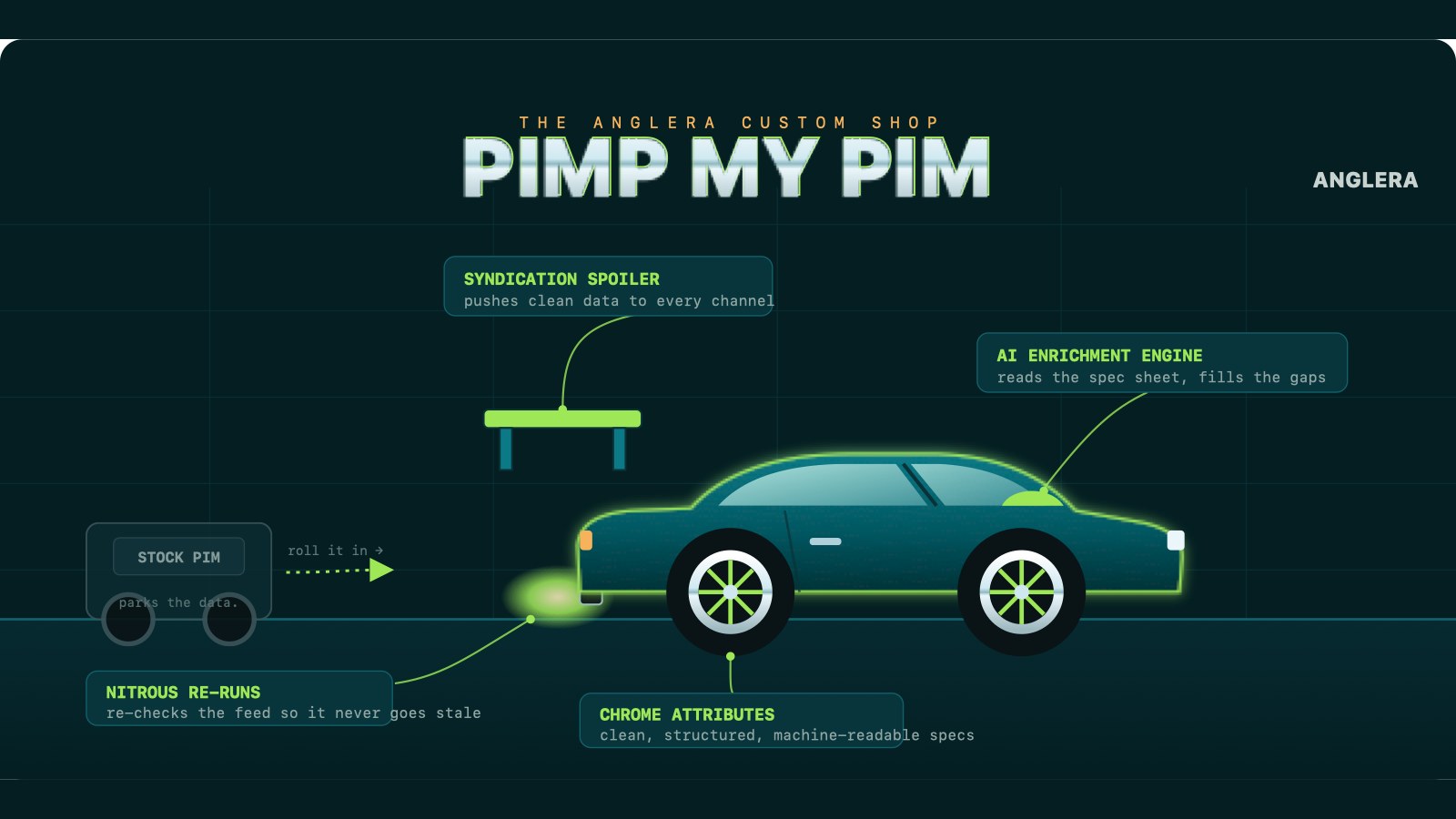
A PIM is a beautiful garage for your product data. It still won't fill the gaps, clean the specs, or push to every channel. Here's the tune-up it's missing.

AI engines don't rank distributor pages, they cite machine-readable specs. Most distributor catalogs aren't built to be cited yet.

A specialist's catalog is the new branch — it scales at content cost, not real-estate cost, and it's leaking share from branch-heavy incumbents.
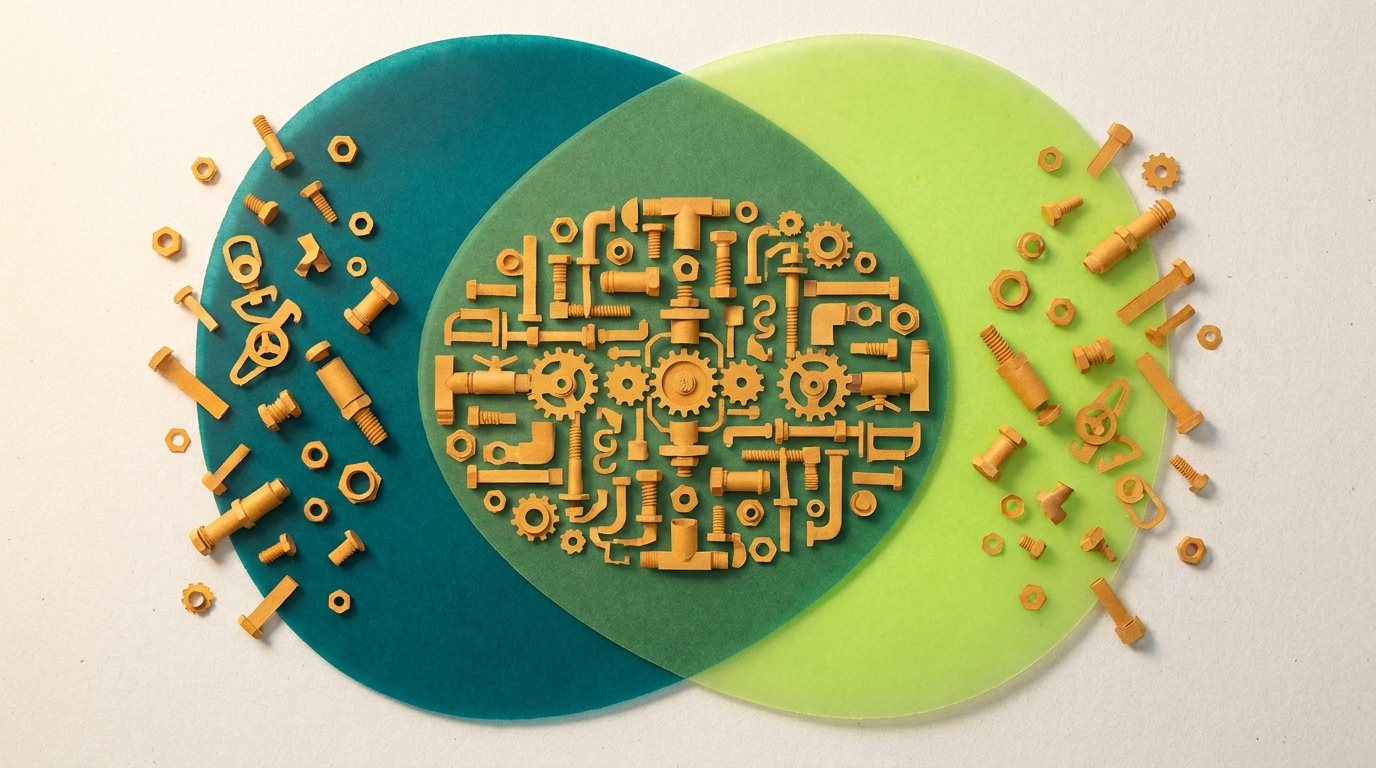
Content pools quote manufacturers signed and SKUs in the library. The number that decides your outcome is how much of YOUR item file they match — and why the misses aren't random.

Measured data from 200+ distributor sites shows replatforms fail for data reasons, not platform reasons. Audit the catalog before you sign the SOW.
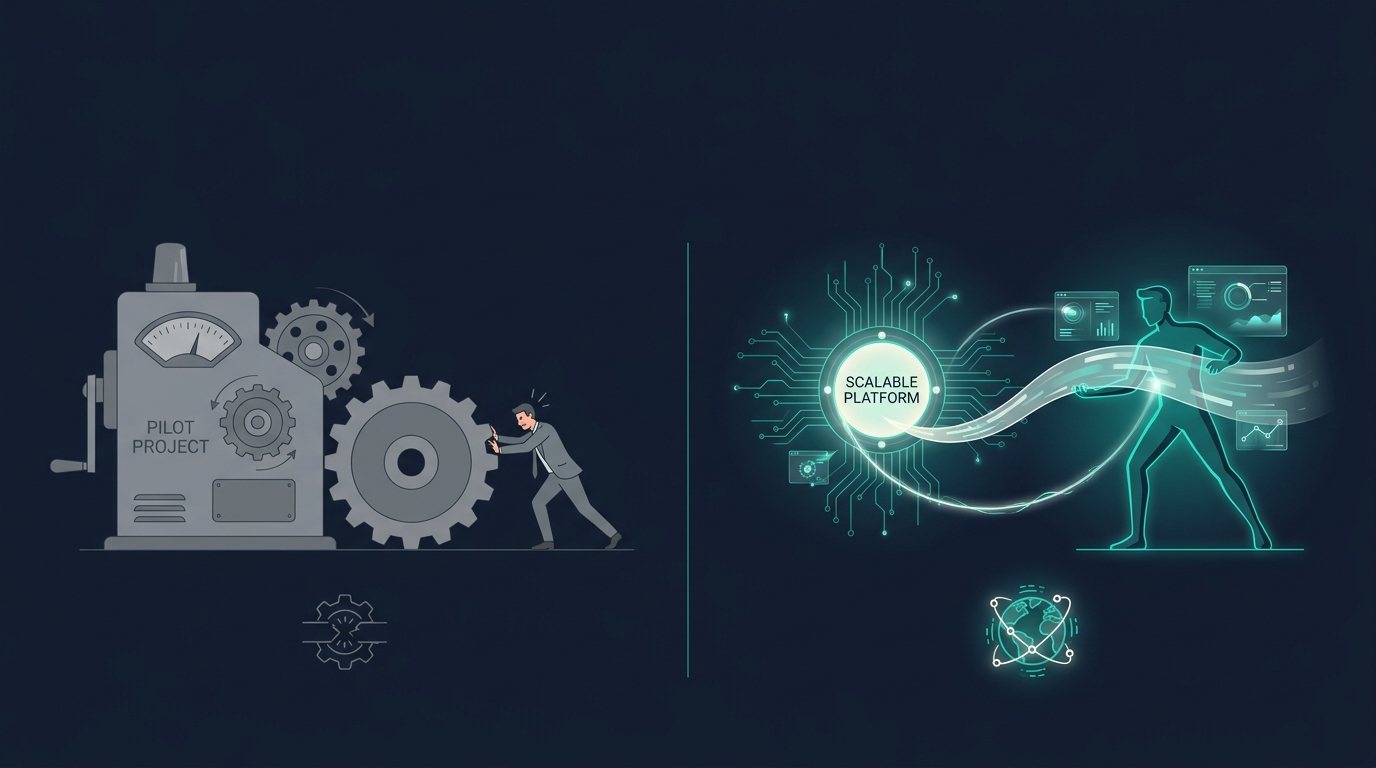
Distributor pilots die on the long tail, not the demo. Why production-scoped slices — not cleaner pilots — are the fix, and what it costs to run one.

Data pools give every distributor the same product record. The differentiation, and the returns problem, live in the SKUs the pool never touched.

Why the ERP item master was never built to be a catalog, and why waiting for replatforming to finish before fixing product data costs distributors two years.

Amazon Business hit $60B in sales, but the threat isn't uniform. We mapped it against six distributor archetypes and our Digital Readiness Index.

ERP migrations validate structure and financial fields, not attribute content. Here's how to audit what came across and enrich what didn't.

Supplier data will never be sell-ready by design. Our Digital Readiness Index shows enrichment capability, not supplier ties, decides catalog quality.
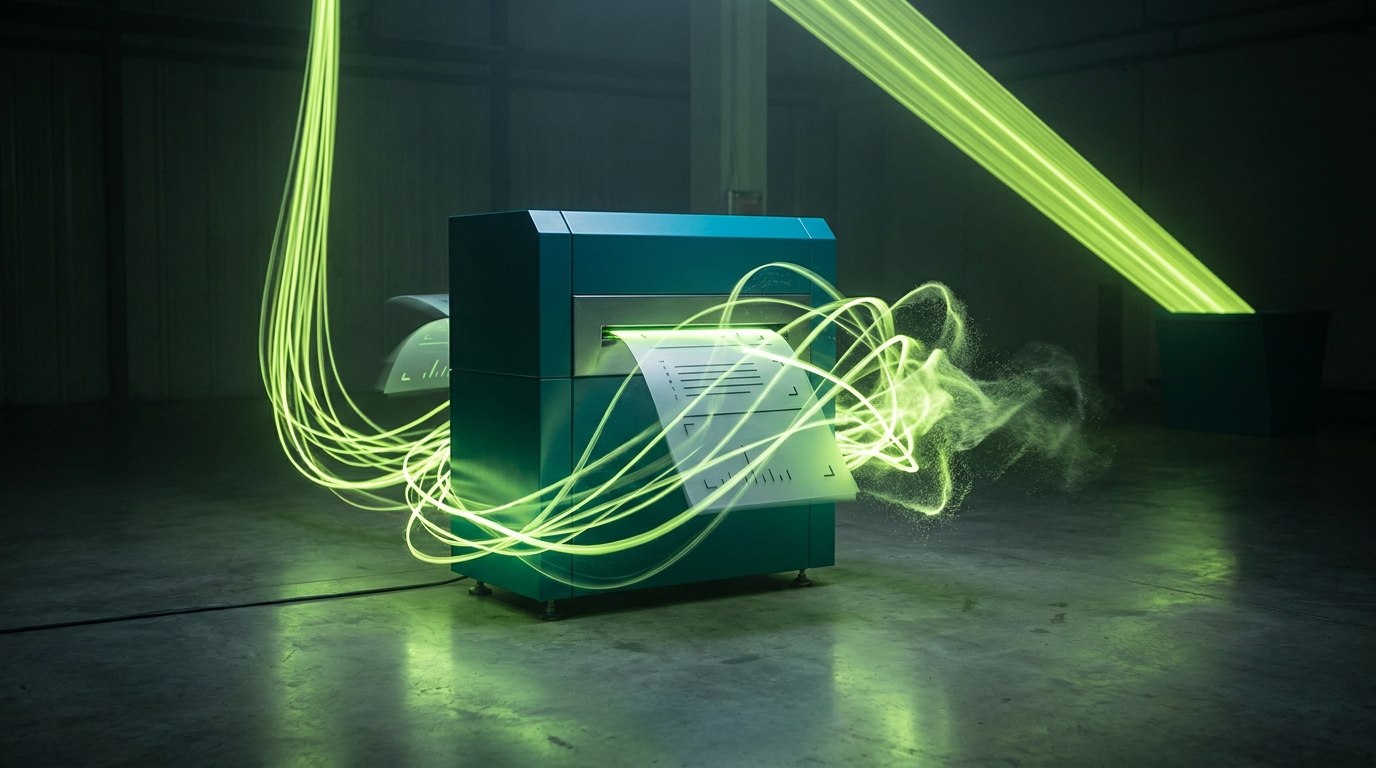
Feed management enriches the printout, not the document. The correction never flows back to your source of truth — so you redo the same work on every channel, forever. Fix it upstream instead.

No new ad budget, no new channel, no replatform. Just the product data you already own, made complete enough to get found, get chosen, and get kept. Here's what that takes — and where the work actually belongs.

PIM AI assists a person filling one field at a time. That's genuinely useful — and it's not the same as owning the work across a hundred thousand SKUs. Knowing the difference is the difference between a tool and an outcome.

Product catalogs don't stay clean once they're clean. Here's how to measure catalog decay rate and what stale data actually costs in lost sales and returns.

Portal adoption plateaus aren't a UX problem. They're a product-data problem, and the next self-service buyer is an AI agent with even less patience for it.

Filters and browse paths are how shoppers and marketplaces narrow millions of SKUs down to a handful. Land in the wrong node — or too shallow a one — and you're not ranked low, you're not in the room.
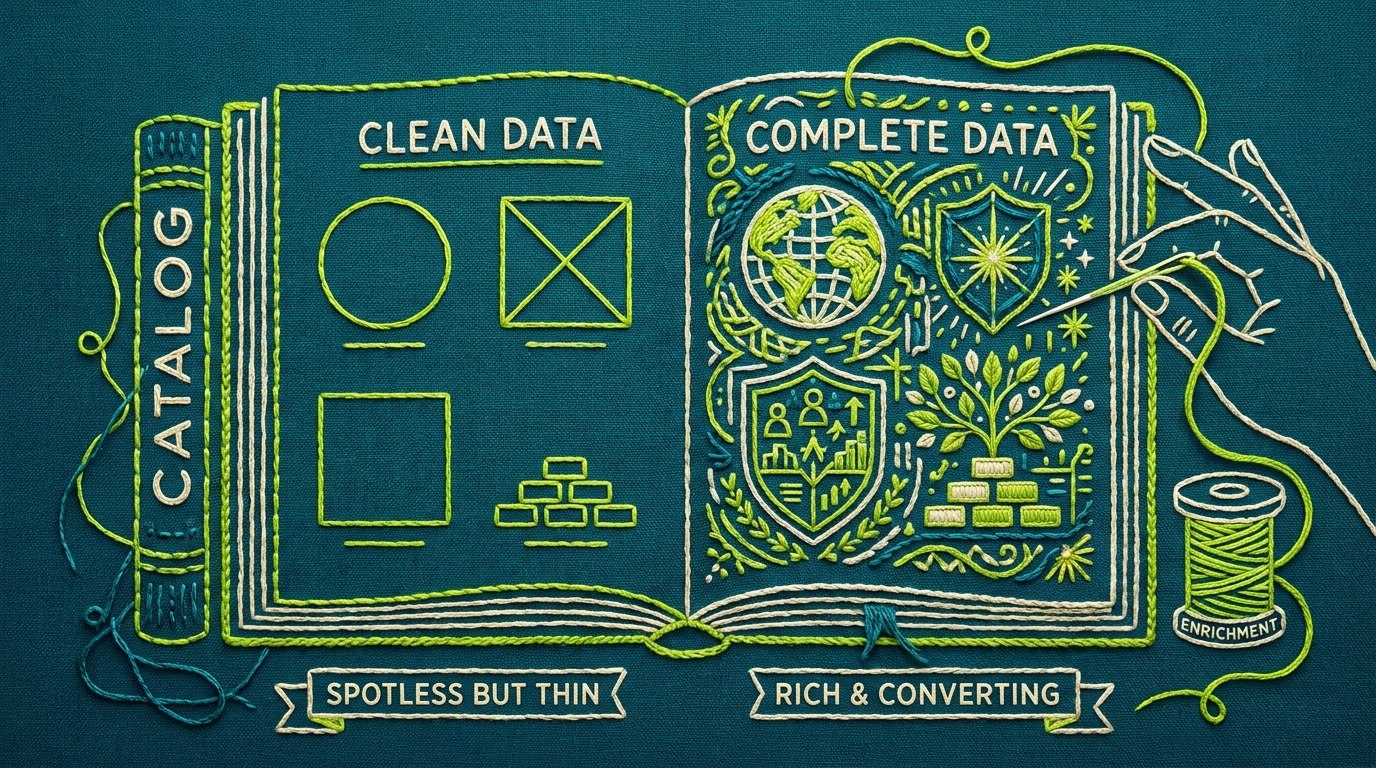
Data cleansing fixes what's already there. Enrichment adds what was never captured. Most catalogs are spotless and still thin — and a tidy listing with nothing in it converts no better than a messy one.

Heritage and replenishment brands don't need continuous enrichment. Here's the project-plus-cadence model that fits an 80-90% carryover catalog.

A PIM stores product data beautifully. It doesn't gather it, clean it, enrich it, or fix it when it's wrong. That gap is where most catalogs quietly fall apart.

Five ways to prove a product-data enrichment project worked, from cohort analysis to holdout tests, and how to guard each one against a false positive.
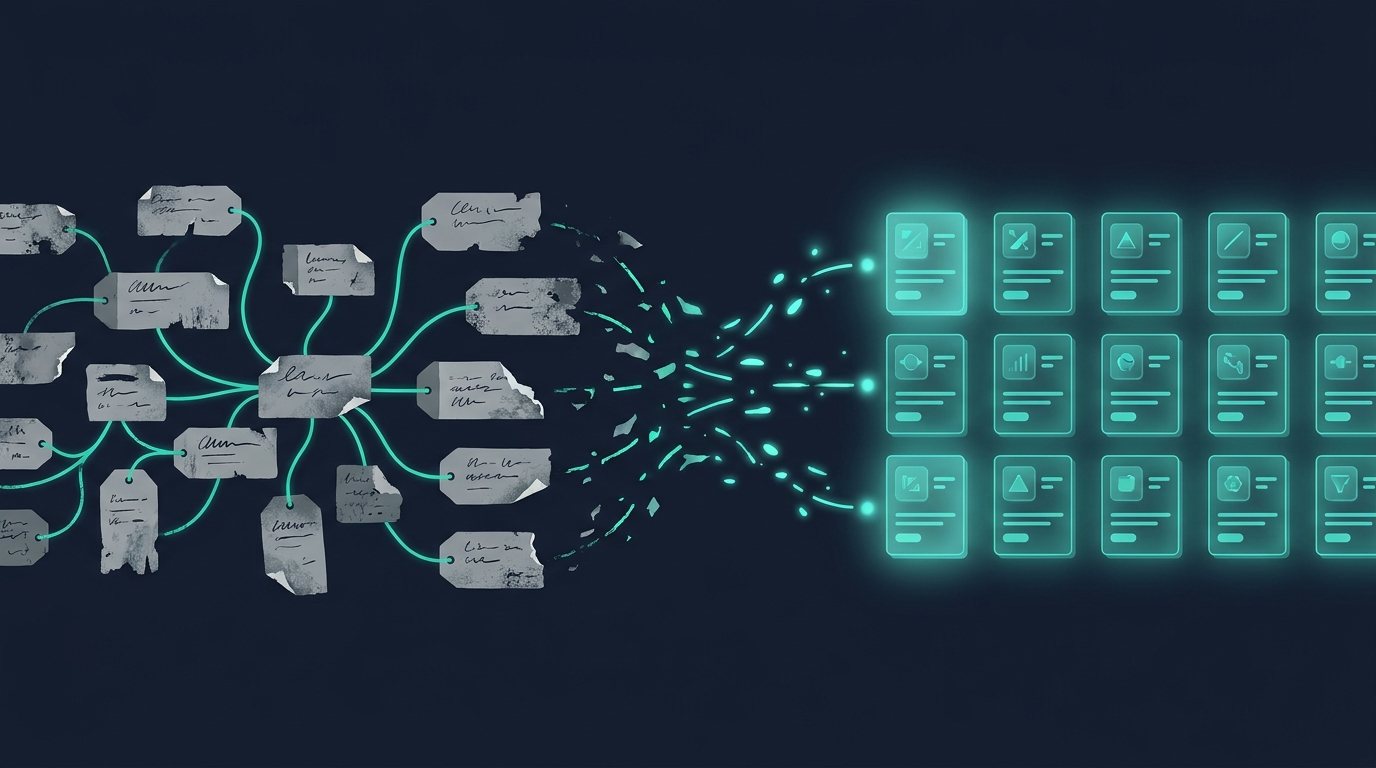
How distributors and marketplaces design category trees and attribute schemas that stay filterable at scale, mapped to GS1 GPC and governed over time.

Catalog migrations lose search rankings from broken redirects and thin PDPs, not the new platform. Here's how to migrate without losing discovery.

Onboarding thousands of new SKUs at once breaks manual enrichment math. Here's why the catalog cold-start problem is operational, not creative, and how to fix it.

PIMs store product data well but don't gap-fill, normalize, or keep it current on their own. Here's why AI buttons don't close that gap, and what does.

How to score product-data quality across completeness, consistency, accuracy, and richness, set a real bar, and keep catalogs improving instead of decaying.