
Galco's Product Pages Tell Two Different Stories
A structural read of Galco's product pages: deep spec tables, PIM-served datasheets and an explicit AI-crawler welcome — sitting on structured data that contradicts what the page says out loud.
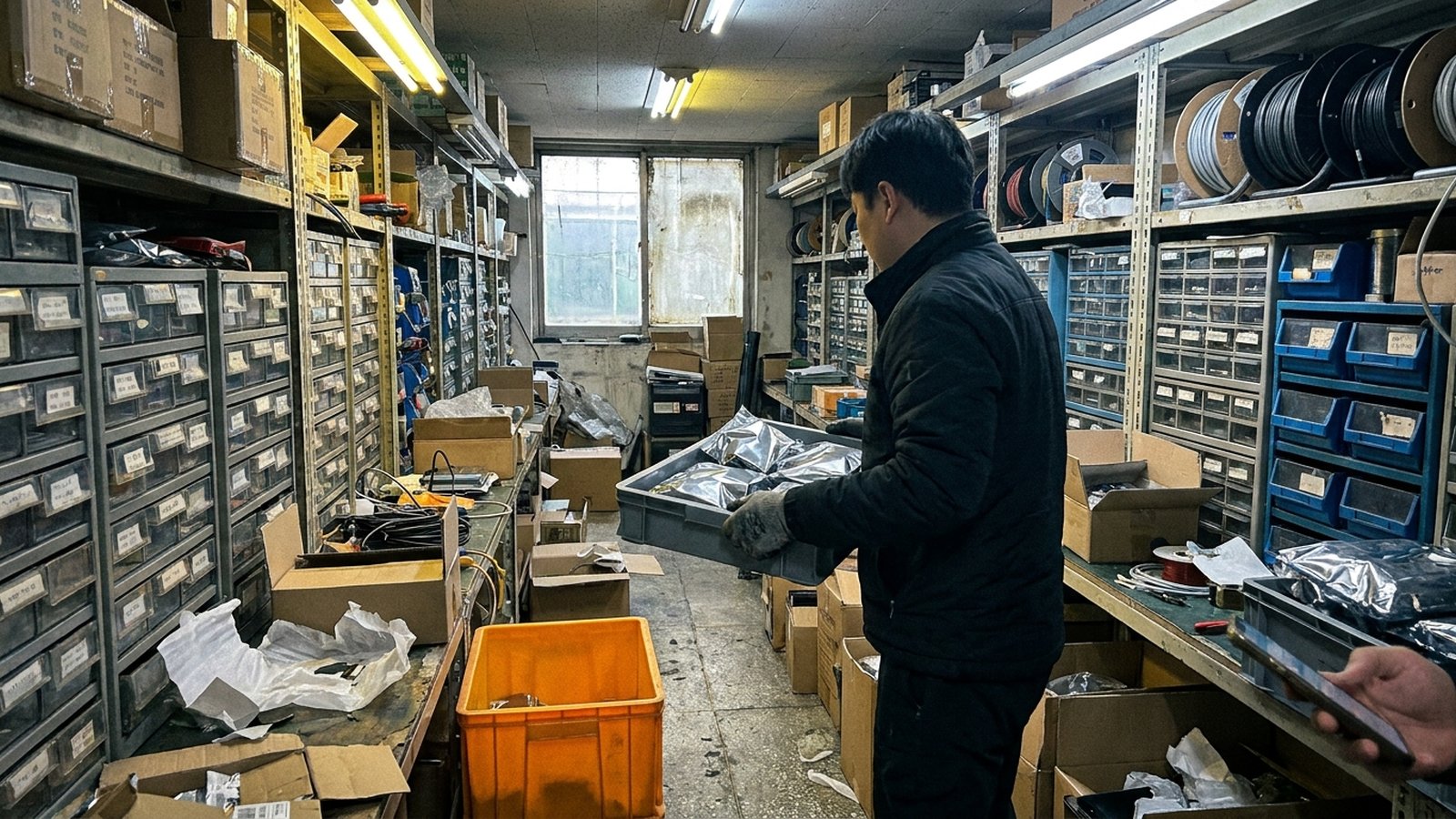
Part of Top Distributors 2026 — the Anglera Index: North America's largest distributors ranked, classified into six operating archetypes, and scored on the measured Digital Readiness Index. Galco joined the index this month as an editorial addition; this is a qualitative structural read, not a DRI measurement.
Galco Industrial Electronics has, on paper, one of the more deliberate digital postures in industrial distribution. Its robots.txt names and admits GPTBot, ClaudeBot, PerplexityBot, OAI-SearchBot and Gemini-Deep-Research while blocking every bot it doesn't recognize, and its scraping notice explicitly permits "artificial intelligence retrieval augmented generation." This is a company that has decided AI agents are a channel and opened the door for them.
Then the agent walks through the door and reads the structured data — and gets told the opposite of what the page says.
What a browser session found
This read comes from a supervised Chrome session on August 6, 2026: a handful of product pages across categories — a bestselling Eaton S801+ soft starter, a Socomec Fuserbloc disconnect, an ABB ACS355 drive, a Reliance Electric repair SKU — plus site search, robots.txt and the sitemap. That is deliberately not how the index measures: the Digital Readiness Index sampling rule takes five pages from the middle of five different category listings, never bestsellers, and only the pipeline writes a score. Treat everything below as a structural read of the machine, not a number.
The body is genuinely good
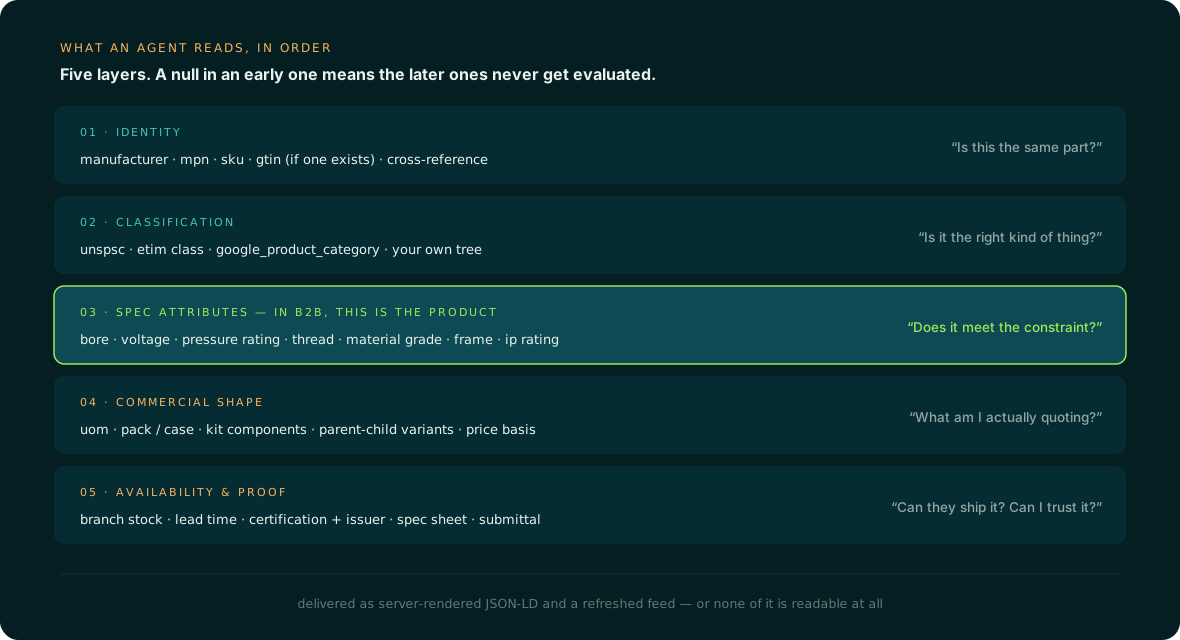
The bones here would embarrass a lot of ranked distributors. Every product page sampled emits Product and BreadcrumbList JSON-LD with brand, SKU, MPN, image and price — in an index where only 8 of 37 measured companies surfaced product structured data at all. Spec tables run 17 rows on the soft starter and disconnect, 27 on the ABB drive, and the same attributes — voltage, current rating, poles, mounting, horsepower, frame size — drive the storefront's layered search facets, which is the tell that a real attribute taxonomy sits behind the pages rather than a description field wearing a costume.
The documents are the strongest signal. Datasheets and catalog pages are served per-product from a dedicated PIM subdomain — pim.galco.com/Manufacturer/<name>/TechDocument/Data Sheet/… — meaning manufacturer documentation is managed as structured, addressable data and attached at the SKU level. And for the legacy inventory its repair business lives on, Galco photographs units itself on one-inch graph paper with a watermark, which is more provenance than most distributors give a product image.
Even the repair operation is structurally interesting: send-in repair of legacy drives is published as individual, crawlable, quotable catalog SKUs with an 18-month warranty and three turnaround tiers — a search for the discontinued Reliance GV3000 family returns 106 results of which 100 are repair offerings. A plant engineer's 2 a.m. "who can fix this" query has a page to land on. That is the technical-specialist model made visible to a crawler.
The voice contradicts the body
The machine-readable layer, though, systematically disagrees with the page it lives on.
Availability tells agents the opposite of the truth. The Eaton soft starter's visible page said "2 in stock — Ships Today." Its JSON-LD offer said schema.org/BackOrder with an availabilityStarts six weeks out. The Socomec disconnect: "45 in stock" on screen, BackOrder in markup. Across every page sampled, the offer markup declared back order regardless of actual stock — the pattern of a template hardcoding availability rather than binding it to inventory. For a human the page works; for an AI agent deciding which distributor can ship today, Galco's own markup takes it out of the running on exactly the same-day-shipping promise the company leads with.
The GTIN field is filled with something that isn't a GTIN. Every sampled page stuffs gtin13 with the internal SKU — S801+R13N3S-CHGP, 38613020-SOCO — an alphanumeric string that cannot validate as a GTIN. Wrong-but-present is worse than absent: it fails identifier validation, forfeits rich-result eligibility, and hands mismatched keys to any system that joins on GTIN.
Service SKUs pollute the product corpus. The repair listings that make the catalog distinctive also emit Product JSON-LD — with price: "0.00", empty descriptions and zero attributes. An agent reading offer markup finds a $0.00 offer on a 200-horsepower drive repair. The repair pages are valuable; typed as full-price products, they teach machines nonsense.
The long tail is thin, and the details are unswept. The disconnect switch's entire description is "FUSERBLOC TS J 3X200A F/L" — a manufacturer abbreviation a buyer must already understand to decode. Encoding mojibake ("-30°C") sits inside structured descriptions. An internal attribute code, categories_separated, leaks into the public filter UI. An exact-MPN search for the ABB drive returns a variant and a repair SKU above the exact match. The About page's title tag misspells "Electronics." None of these is fatal; together they say nobody is reading the pages the way a machine does.
The read
Galco made the strategic decision — the crawler-policy layer proves it's deliberate — that AI agents should be able to shop this catalog. The catalog underneath is closer to ready than most of the vertical: real attributes, real documents, a PIM doing its job. What's missing is one unglamorous discipline: making the machine-readable layer state the same facts as the visible page. Fix the availability binding, drop or fix the GTIN field, type the repair catalog as services, and the same pages that currently mislead an agent become some of the most agent-shoppable in industrial distribution. The welcome mat is out; the room isn't set.
How that nets out against the rest of the index is a question for the pipeline, not this post — Galco's storefront gets its five-category sample in the October re-measure, and the score will be whatever the rubric says it is.