
Apex Oil: The Bankruptcy That Built a Trading House
Apex Oil survived one of the era's largest private Chapter 11 filings, then built a diversified trading house. Now it's on MDM's 2026 Lubricants & Fuels list.
Part of Distributor Playbooks — strategy teardowns of every company on the MDM Top Distributors lists. New to the 2026 lists.
Apex Oil Company shows up on Modern Distribution Management's 2026 Top Distributors list in the Lubricants & Fuels category, one of a few dozen wholesalers MDM tracks in a segment it deliberately leaves unranked. Apex has been privately held since 1932, and unlike most names on that list it survived a bankruptcy in the 1980s that had almost nothing to do with fuel. The story of how it got from there to here says more about the company than its terminal count does.
A Depression-era fuel jobber
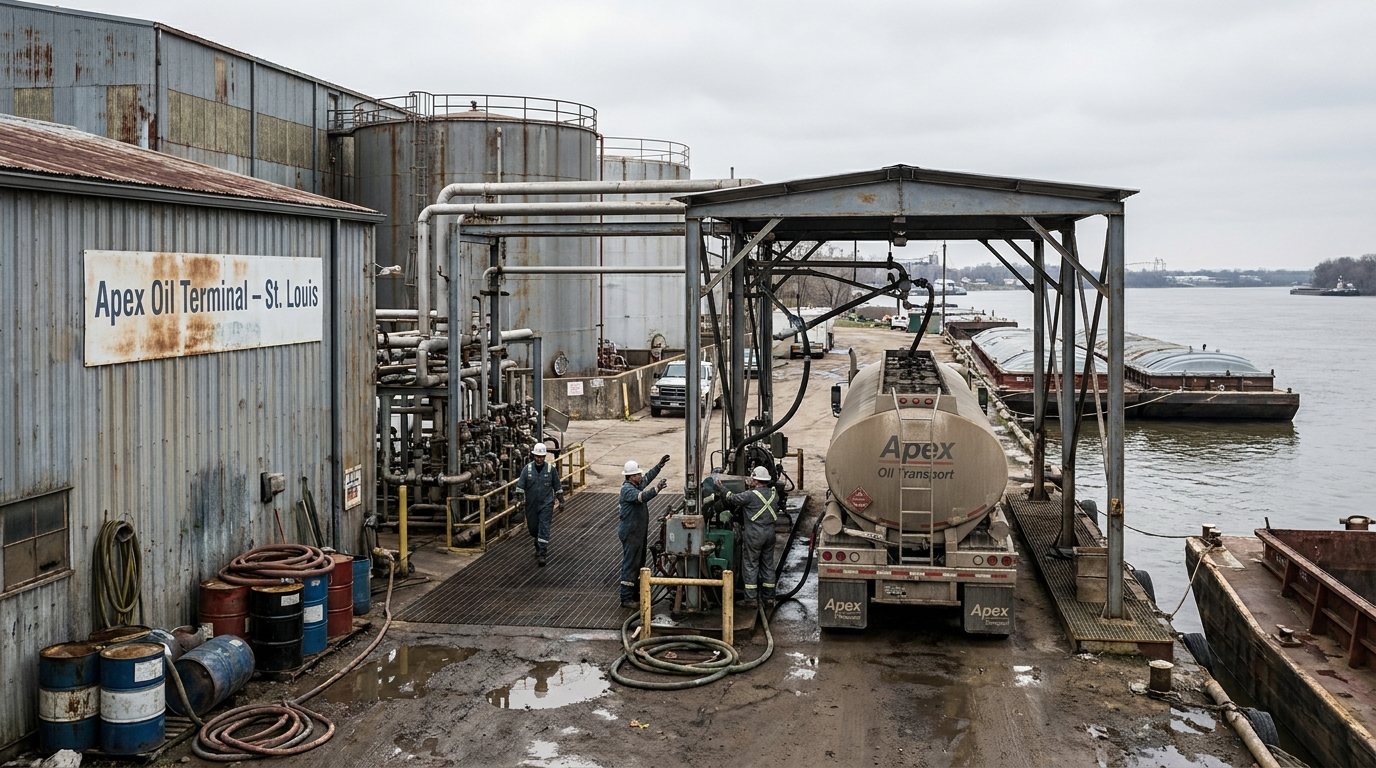
Samuel R. Goldstein incorporated Apex Oil in St. Louis in 1932, wholesaling fuel oil into a Midwest still converting from coal, and building the business on river logistics and tight margins rather than owning wells or refineries. That structural choice, be a mover and blender of other people's petroleum rather than a producer of it, is the thread that runs through everything Apex did afterward, according to the company's own account of its history.
Novelly turns a jobber into a trading house
Paul "Tony" Novelly joined Apex in 1969 and, through the 1970s, pushed the company well past regional fuel oil distribution into international petroleum trading, tanker shipping, and refining-adjacent acquisitions. By the mid-1980s the Novelly-run Apex Holding group controlled not just barge and terminal operations but a fleet of oceangoing tankers run through subsidiaries like Trinidad Corporation and Crest Tankers, according to Forbes's profile of Novelly. That expansion is what made Apex a genuine trading operation instead of a regional distributor. It's also what nearly ended the company.
The 1987 filing, and what actually caused it
On December 24, 1987, Apex Holding Co. and its shipping affiliates filed for Chapter 11, in a case widely described at the time as one of the ten largest privately held companies in the country to seek bankruptcy protection. The trigger wasn't the fuel business. It was a wave of asbestosis claims from merchant mariners who had worked aboard tankers operated by Apex's Trinidad Corporation and Mathiasen's Tanker Industries subsidiaries, more than 230 claimants pursuing personal injury and wrongful death suits that the shipping arms could not absorb, per the Eighth Circuit's 1992 opinion in the resulting claims litigation. A distribution and trading company was pulled into bankruptcy by a liability it inherited from owning ships. Apex reorganized and emerged in the early 1990s, and Novelly came out the other side as sole owner of the whole enterprise.
The insight: a fuel distributor with a trading house's balance sheet
Here's the part that doesn't show up on a fuel distributor's About page. Coming out of bankruptcy, Novelly didn't retreat to a simple, single-line fuel wholesaling business. He kept building a portfolio that looks less like a typical regional distributor's and more like a commodities trading house's: barge and towing operations on the inland waterway system, marine terminal networks including a stretch he assembled as World Point Terminals, an international oil trading arm based in Bermuda called AIC, a 40 percent stake in publicly traded specialty chemicals maker FutureFuel, and, improbably, ownership of Shanty Creek, a ski and golf resort in northern Michigan, according to Forbes's accounting of Novelly's holdings. None of that is what a pure logistics operator buys. It's what someone who thinks in uncorrelated positions buys, the same instinct that took Apex into tanker shipping in the 1970s, just pointed at assets that couldn't sink the fuel business a second time if one of them went sideways. Most distributors on the MDM lists optimize branch density or category depth. Apex optimized for surviving its own balance sheet.
A handoff completed just in time
Novelly stepped down as CEO in 2022, handing the company to his son, Paul Novelly II. Tony Novelly died on February 6, 2025, at age 81, according to Forbes and the company's own St. Louis location page. Apex enters the 2026 MDM rankings as a company that just completed a generational transition at the top, still wholly family-owned, still headquartered a few miles from where Goldstein started it, still running the Apex Towing, Clark Oil Trading, and Petroleum Fuel & Terminal subsidiaries alongside its lubricants and fuels business, per Forbes's company profile. In a fuels and lubricants sector where private equity and strategic buyers have consolidated most of the mid-sized regional names, a 90-plus-year-old family business surviving both a near-fatal bankruptcy and a leadership transition without selling out is itself the notable fact.
Whatever else changes in distribution, someone still has to own the barge, staff the terminal, and know precisely which blend a customer needs delivered by Thursday. Apex's ninety-plus years are a reminder that the unglamorous infrastructure of fuel logistics, terminals, barges, specifications, is what survives when everything else about a company's structure gets tested.
This profile is part of Anglera's Distributor Playbooks series, examining the strategies behind the companies on MDM's 2026 Top Distributors lists.