
D&H Distributing: How a Tire Shop Outlasted IT's PE Wave
D&H Distributing ranks #5 in Electronics on MDM's 2026 Top Distributors list. Its real story is 108 years of staying family-and-employee owned in a PE-rolled sector.
Part of Distributor Playbooks — strategy teardowns of every company on the MDM Top Distributors lists. New to the 2026 lists.
D&H Distributing lands at #5 in Electronics on Modern Distribution Management's 2026 Top Distributors list, the trade publication's annual ranking of North America's largest wholesale distributors across 20 verticals. The company started in 1918 repairing tires in Williamsport, Pennsylvania. It now moves servers, networking gear, cybersecurity software and AI infrastructure through six North American distribution centers, and it is still owned by the family that founded it — a rarity in a channel where the two biggest players spent 2020 and 2021 getting bought by private equity.
From retreads to radios
D&H did not start as a technology company. Brothers-in-law David Schwab and Harry Spector opened Economy Tire and Rubber to retread worn tires, a practical trade for the era. The pivot came in the 1920s, when the pair started stocking crystal radios and struck a partnership with Philco. By November 8, 1929, the business had renamed itself D&H Distributing, and the tire operation was history. That founding swerve, jumping from rubber to radios inside a decade, set a pattern the company has repeated: chase the next consumption category rather than defend the current one. Electronics gave way to consumer appliances, then to PCs, then to the broader IT stack the company sells today, according to the company's own history and Wikipedia's account of the founding.
The insight: staying independent while the industry consolidated around it
Here is the part that does not show up on the About page. Between 2020 and 2021, the two distributors that dwarf D&H in scale both changed hands. Platinum Equity bought Ingram Micro in December 2020. Apollo Global Management bought Tech Data in June 2020, then folded it into Synnex in a $7.2 billion deal that created TD Synnex, the world's largest IT distributor, with Apollo retaining 45 percent ownership of the combined company, per Channelnomics' coverage of the merger. That is the sector D&H competes in: a channel where scale increasingly means a financial sponsor on the cap table and an eventual exit on the roadmap.
D&H took the opposite structure. Third-generation co-presidents Michael and Dan Schwab, grandsons of founder David Schwab, run the company today, and it remains privately held by the family. Layered on top since the 1990s is an Employee Stock Ownership Plan that gives D&H's roughly 1,600 employees a direct ownership stake, a structure the company credits with its retention and its regular appearances on best-places-to-work lists, according to the Central Penn Business Journal. A management quote captures the logic plainly: because team members own a piece of the company, they are wired to think like owners rather than headcount. Family control plus broad employee ownership is a combination almost nobody else in a PE-consolidated IT distribution channel is running, and it changes the incentive math: no sponsor pushing for a levered recap or a five-year flip, just a leadership team that answers to relatives and to the people stocking the warehouse.
That structure has not made D&H slow. Revenue grew from roughly $1.45 billion in 2008, when the Schwab brothers took the co-president seats, to $5.9 billion by 2024, landing the company at #106 on Forbes' list of America's largest private companies, per Wikipedia and Forbes' company profile. D&H reported double-digit growth again in 2025, with cloud infrastructure sales up 70 percent and security solutions up 63 percent inside its Advanced Solutions+ business unit, outpacing a broader IT distribution channel that grew a more modest 6 percent by the fourth quarter, according to the company's March 2026 growth announcement.
Buying scale without selling control
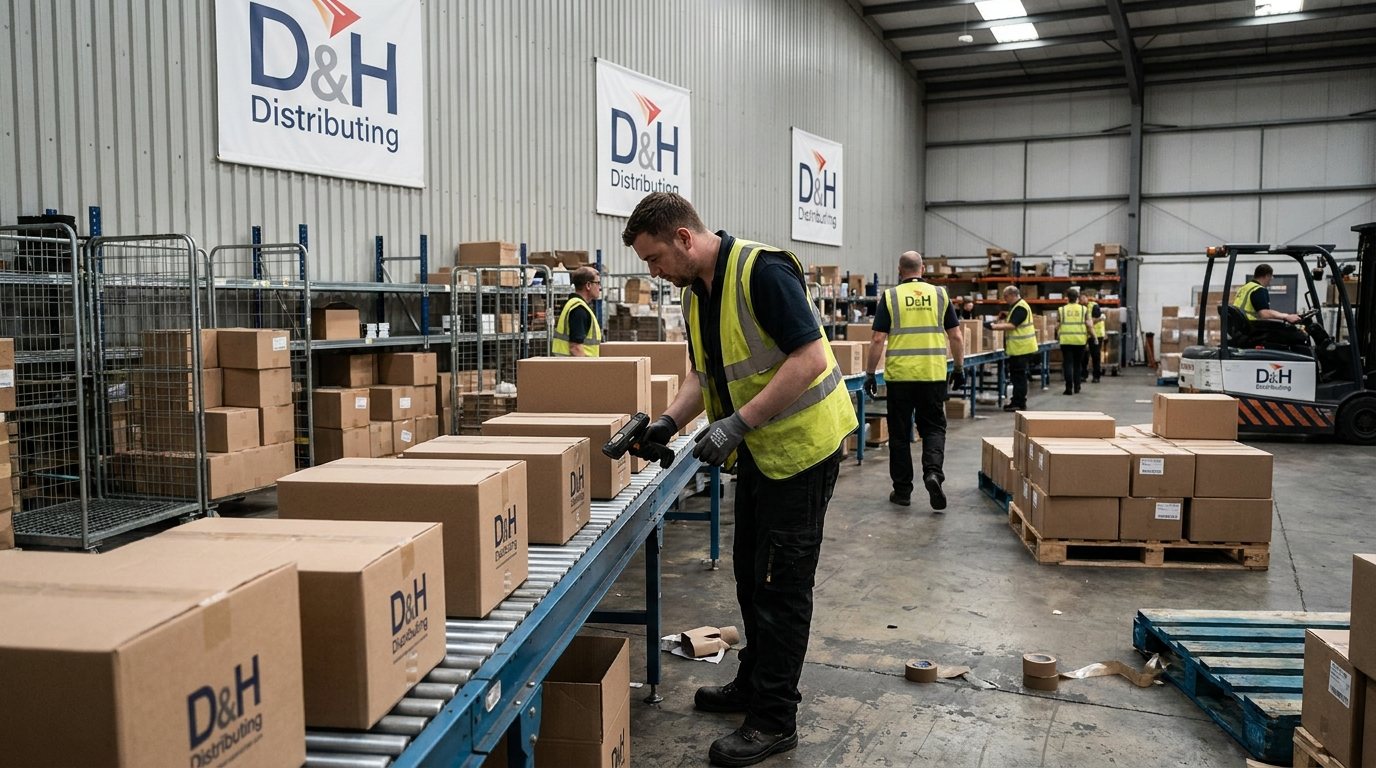
The independence has not meant standing still on the acquisition front either, it just means D&H buys instead of getting bought. In January 2026, the company acquired Fulfillment.com, a multi-site ecommerce fulfillment and cross-border logistics platform founded in 2011, folding it into D&H's SCALE division, its third-party logistics arm. The deal added international fulfillment capacity and technology to a unit built to serve both B2B resellers and direct-to-consumer brands, with Fulfillment.com's existing management staying in place, per Digital Commerce 360's reporting. Around the same window, D&H struck an expanded U.S. partnership with Fortinet and widened its Dell authorization to the full storage and server portfolio across the U.S. and Canada, moves aimed squarely at AI infrastructure demand rather than the legacy PC-and-peripherals business that built the company's early scale.
That is the tension worth naming plainly: a distributor built on a century of incremental category pivots, still governed by the family that made the first one, now has to keep pivoting fast enough to serve AI-era infrastructure buyers against rivals with private-equity balance sheets behind them. So far the numbers say D&H is managing it without giving up the ownership structure that makes it unusual in its own channel.
Distribution's biggest strategic bets rarely happen on the sales floor. They happen in the ownership structure, the catalog discipline and the logistics network a company chooses to build, or refuses to sell.