
Top Lubricants & Fuels Distributors 2026: A Blank Scoreboard
Twenty lubricants and fuels distributors ranked by archetype, in the one Top Distributors 2026 vertical where the Digital Readiness Index came back empty.
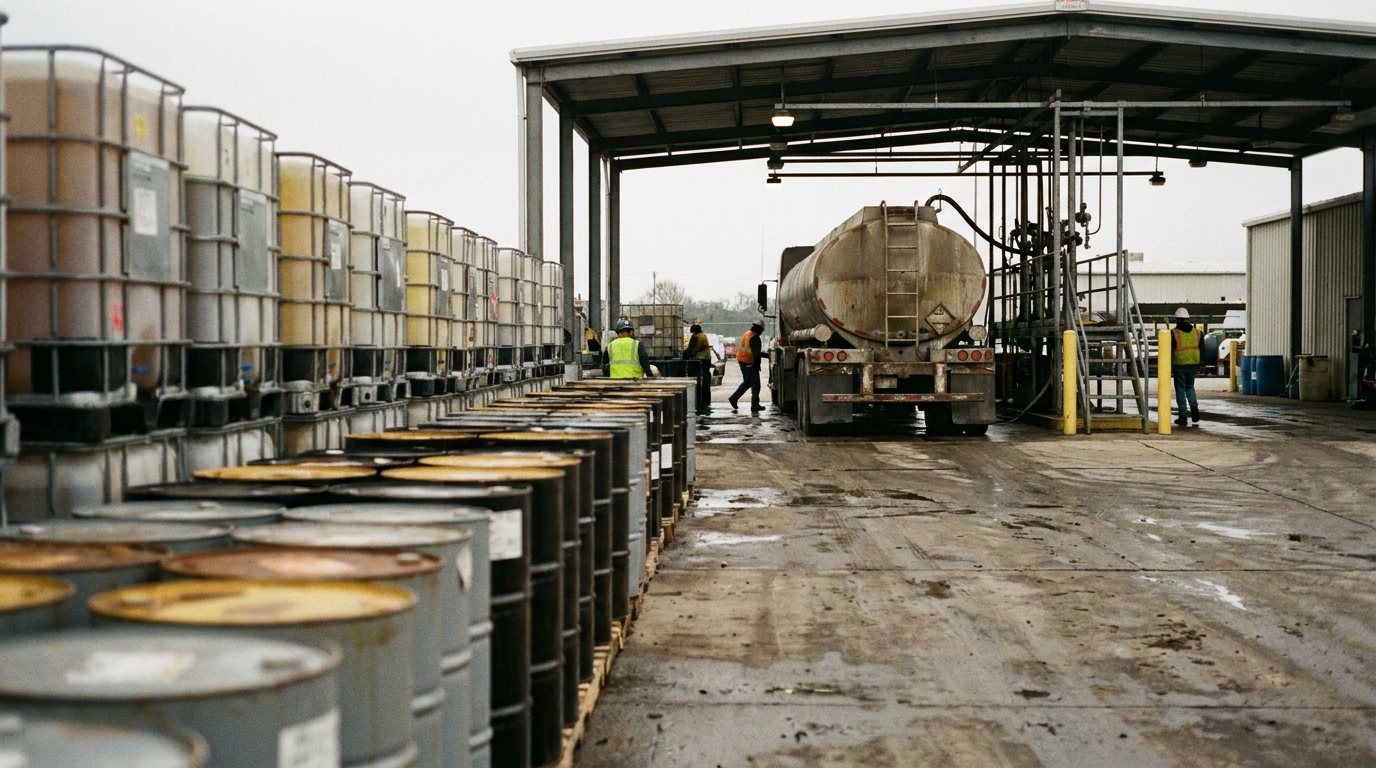
Part of Top Distributors 2026 — the Anglera Index: North America’s largest distributors ranked, classified into six operating archetypes, and scored on the measured Digital Readiness Index.
Lubricants and fuels is the most active consolidation vertical in this index and the least visible one. Twenty distributors made the cut, five 2025-2026 acquisitions came from a single PE-backed roll-up, and not one company returned a measured Digital Readiness Index score. That is not twenty zeros. It is twenty companies whose public catalogs either do not exist or were never put in front of the crawler, and the difference between those two states is the real story here.
The field
Almost nothing here is disclosed. Seven companies carry a revenue figure: Tricon Energy at $14.0B for FY2025, Mansfield Energy at $8.3B for FY2025, Brenntag North America at $6.5B for FY2025 on a North America basis, Colonial Group at an estimated $5.0B total-company for FY2025 — 46th and 53rd in the wider Top Distributors 2026 index — Apex Oil at an estimated $4.6B for FY2025, Guttman Holdings at an estimated $3.0B for FY2025, and Moove at an estimated ~$490M in North America for FY2023. The other thirteen report "not disclosed" — itself the dominant fact of this vertical, which runs almost entirely on private, family, ESOP, and PE-sponsor capital, with only Brenntag North America and Moove sitting under a larger public parent.
| Company | Archetype | Ownership | Revenue | DRI status |
|---|---|---|---|---|
| Colonial Group | scale-aggregator | private-family | $5.0B (FY2025, est.) | Not scored — no public catalog |
| Brenntag North America | scale-aggregator / technical-specialist | subsidiary | $6.5B (FY2025, NA) | Not scored — no public catalog |
| Moove (North America) | scale-aggregator / catalog-native | subsidiary | ~$490M (FY2023, NA, est.) | Not in measured set |
| RelaDyne | scale-aggregator / pe-rollup | private-pe | not disclosed | Not in measured set |
| Cadence Petroleum Group | pe-rollup / branch-density | private-pe | not disclosed | Not scored — no public catalog |
| Liquid Tech Solutions | pe-rollup / program-supplier | private-pe | not disclosed | Not in measured set |
| Pilot Thomas Logistics | pe-rollup / program-supplier | private-pe | not disclosed | Not in measured set |
| Carson Oil | branch-density | private-family | not disclosed | Not scored — no public catalog |
| SC Fuels | branch-density / scale-aggregator | subsidiary | not disclosed | Not in measured set |
| Senergy Petroleum | branch-density / program-supplier | private-family | not disclosed | Not in measured set |
| Southern Counties Lubricants | branch-density | private-family | not disclosed | Not in measured set |
| Great Lakes Petroleum | program-supplier | private-family | not disclosed | Not in measured set |
| Parman Energy Group | program-supplier / branch-density | esop | not disclosed | Not in measured set |
| Port Consolidated | program-supplier / branch-density | private-family | not disclosed | Not in measured set |
| Dilmar Oil Company | technical-specialist / branch-density | private-family | not disclosed | Not scored — no public catalog |
| Smitty's Supply | technical-specialist / branch-density | private-family | not disclosed | Not in measured set |
| Tricon Energy | Scale-aggregator | Private (family) | $14.0B (FY2025, est.) | Not scored — not sampled |
| Mansfield Energy | Scale-aggregator / program-supplier | Private (family) | $8.3B (FY2025, est.) | Not scored — not sampled |
| Apex Oil | Scale-aggregator | Private (family) | $4.6B (FY2025, est.) | Not scored — not sampled |
| Guttman Holdings | Program-supplier / branch-density | ESOP | $3.0B (FY2025, est.) | Not scored — not sampled |
Ordered by archetype cluster, since revenue is the one column this vertical mostly refuses to fill in.
Who's buying whom
Scale-aggregators are the largest cluster at seven companies — Colonial Group, Brenntag North America, Moove, RelaDyne, Tricon Energy, Mansfield Energy, and Apex Oil — competing on national buying power and a single brand over a distribution network. Branch-density operators — Carson Oil, SC Fuels, Senergy Petroleum, and Southern Counties Lubricants — compete on proximity, the closest cardlock or warehouse to the customer. Four program-suppliers (Great Lakes Petroleum, Parman Energy Group, Port Consolidated, Guttman Holdings) embed tank-monitoring or mobile-fueling equipment into a customer's site, and two technical-specialists (Dilmar Oil, Smitty's Supply) blend and reclaim their own fluids rather than reselling someone else's line.
The pe-rollup cluster is where the 2025-2026 activity concentrates. Cadence Petroleum Group, backed by Wellspring Capital, closed five named acquisitions in this window alone — R.W. Davis Oil, B-J Supply, Glockner Oil, BOC Oil, and SEI — the fastest deal pace in the set, building a 34-location, 22-state platform per its archetype rationale. RelaDyne, which its own rationale calls the nation's largest lubricant distributor at 190-plus locations, added Dion and Sons in February 2026 and Chart Distribution Group in June 2026, then refinanced into a $1.49B Term B facility that S&P downgraded to B- citing elevated leverage. Colonial Group made two moves of its own: Colonial Oil Industries acquired Atkinson Oil Company, and sister unit Colonial Chemical Solutions acquired Integrity Partners Group. Even Moove, which claims the largest-distributor title on volume rather than location count, saw its parent Cosan reported to be exploring a stake sale, per Valor International — ownership itself is still moving here, not just branch counts.
Two companies in the same 20-name list each claim to be the largest lubricant distributor in the country, on different metrics — a sign this vertical is big and fragmented enough that "largest" has more than one honest answer.
Why the shelf is dark
The Digital Readiness Index samples five live product pages from five categories of a distributor's own public catalog and scores what a machine or buyer can extract from them. In lubricants and fuels, that sampling step failed before scoring could start, for two distinct reasons that should not be read as the same finding.
Five companies were checked and found to have no public catalog to sample. Colonial Group's corporate site is brochureware that fans out to subsidiary domains; its Colonial Oil Industries lubricants pages stop short of individual product records. Brenntag North America publishes an alphabetical index of roughly 600 chemicals with CAS numbers and use-case copy, informational rather than transactional. Cadence Petroleum Group's "By Product" navigation leads only to category-level marketing pages for motor oils, gear oils, and fuel. Carson Oil organizes its line into four service categories with no SKU-level pages beneath them, and Dilmar Oil Company's Automotive, Transportation, Industrial, and Aviation categories are the same kind of overview page. That is a finding about how these five present product online: not absent from the internet, just structured for a sales conversation rather than a catalog browse.
The other fifteen distributors were not part of this measurement pass at all — a gap in coverage, not a finding about Apex Oil, Great Lakes Petroleum, Guttman Holdings, Liquid Tech Solutions, Mansfield Energy, Moove, Parman Energy Group, Pilot Thomas Logistics, Port Consolidated, RelaDyne, SC Fuels, Senergy Petroleum, Smitty's Supply, Southern Counties Lubricants, or Tricon Energy. None failed a test they were never given, and several run public-facing cardlock locators a future pass would need to check on their own terms.
Set against the full index's median Digital Readiness score of 58, zero scores out of twenty is the most extreme outcome in the index, and it tracks with the product. A distributor's own product pages, when they exist, would need to answer what a sourcing agent actually asks about a lubricant or fuel: viscosity grade, API or ACEA service category, base oil type, container size from quart to tote to bulk delivery, flash point, and whether it carries an NSF H1 food-grade registration. None of that is exotic data — it is standard content on a technical data sheet. The absence here is not that these companies lack the attributes; it is that the attributes live in a PDF a rep sends after a call, not a page a crawler can reach.
Where this settles
The consolidation math and the catalog math are heading in opposite directions. Cadence Petroleum, Pilot Thomas, Liquid Tech Solutions, and RelaDyne are all PE-sponsored platforms still adding locations, and platform owners eventually standardize the back office of whatever they buy, storefront included. The family-owned branch-density operators — Carson Oil, Southern Counties Lubricants, Dilmar Oil, Smitty's Supply — face less pressure to do that, since the mobile-fueling, cardlock, and contract-supply model this vertical runs on was built for a phone call and a delivery truck, not a shopping cart. Whether the next measurement pass finds more public catalogs to sample, or the same brochureware under new owners, is the open question this cut leaves for next year.